

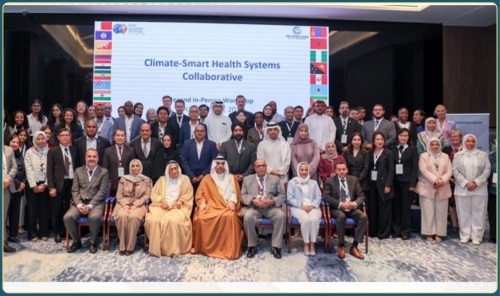
Bahrain Hosts International Conference on Climate-Resilient Smart Health Systems
Bahrain is reinforcing its commitment to building resilient and sustainable health systems through strategic policy-making, infrastructure development, and innovation, ensuring efficient healthcare delivery and integrated services across all levels of care. This vision aligns with the Kingdom’s comprehensive development agenda under the leadership of His Majesty King Hamad bin Isa Al Khalifa and with the guidance of His Royal Highness Crown Prince Salman bin Hamad Al Khalifa.
These remarks were made by His Excellency Lieutenant-General Dr. Sheikh Mohammed bin Abdullah Al Khalifa, Chairman of the Supreme Council of Health, during the opening of the “Climate-Smart Health Systems” conference. The event, organized by the Supreme Council of Health in partnership with the World Bank and the Joint Learning Network for Universal Health Coverage (JLN), runs from 5 to 9 October 2025, gathering representatives from member states and experts in public health, environmental sustainability, and development.
His Excellency highlighted that hosting this international conference reflects the global community’s confidence in Bahrain’s healthcare capabilities and demonstrates the Kingdom’s dedication to aligning its national health system with the best global practices.
“The Supreme Council of Health, in collaboration with various stakeholders, continues to strengthen the national healthcare system’s resilience and readiness to face health and environmental challenges in line with global objectives,” he said.
Welcoming participants, Her Excellency Dr. Jalila bint Al-Sayed Jawad Hassan, Minister of Health, emphasized the importance of international knowledge exchange to drive innovation in addressing climate-related health challenges. She affirmed Bahrain’s commitment to adopting global best practices for health systems capable of adapting to climate change.
Dr. Hassan added that Bahrain has integrated the United Nations Sustainable Development Goals—particularly SDG 3 (Good Health and Well-being) and SDG 13 (Climate Action)—into its national plans, aligning health indicators with sustainability strategies. She noted that, in line with Bahrain’s Economic Vision 2030, the Kingdom has expanded healthcare infrastructure, developed national human resources, and strengthened preventive and therapeutic services to improve public health and enhance the system’s capacity to respond to environmental changes.
Dr. Ibrahim Ali Al Nawakheda, Secretary-General of the Supreme Council of Health and Chair of the Global Network for Universal Health Coverage, also addressed the conference, stressing the network’s role in supporting countries to achieve universal health coverage while integrating health policies with environmental challenges through practical, comprehensive strategies.
The conference includes panel discussions and specialized workshops designed to formulate actionable recommendations aimed at strengthening the resilience of health systems against climate change, ultimately contributing to the achievement of sustainable development goals.
Related Posts