

Bahrain Highlights Decade of Achievements in Space Sector at International Forum in Sydney
Dr. Jihad Abdullah Al-Fadel, Second Deputy Speaker of the Shura Council, emphasized Bahrain’s significant achievements in the space sector and the pivotal role of the legislative authority in supporting national space initiatives inspired by the vision of His Majesty King Hamad bin Isa Al Khalifa, with continuous guidance and support from His Royal Highness Prince Salman bin Hamad Al Khalifa, Crown Prince and Prime Minister. She noted that the legislative and executive authorities have worked hand in hand to ensure the provision of resources and requirements for the space sector.
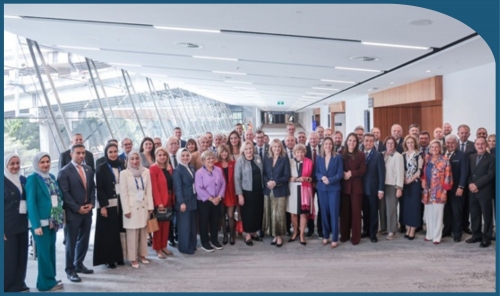
Dr. Al-Fadel delivered her remarks at the 15th International Meeting of Ministers and Members of Parliaments (MMoP), organized by the International Astronautical Federation (IAF) in Sydney, Australia. The meeting, attended by Her Excellency Fatima bint Jaffer Al Sairafi, Minister of Tourism, included representatives from governments and parliaments of approximately 24 countries, alongside space experts, under the theme: “Space: An Indispensable Ally for Decision-Makers.”
Speaking on the theme “Space for Improving Public Services,” Dr. Al-Fadel highlighted that the legislative authority’s role extends beyond drafting laws. She stressed Bahrain’s efforts to establish a dedicated space law while ensuring the parliament acts as a strategic partner by approving budgets for national space projects, monitoring resource utilization, encouraging partnerships with universities, research centers, and international agencies, and raising public awareness of space technology’s societal benefits.
“By converting space data and imagery into precise and reliable information, governments can implement more effective policies and deliver efficient services,” Dr. Al-Fadel said. “Space technology supports environmental monitoring, disaster management, urban planning, water resource protection, and climate and air quality assessment.”
She further underscored that integrated support for Bahrain’s space sector has led to remarkable progress over the past decade since the establishment of the Bahrain Space Agency. The kingdom has developed over 25 space applications supporting more than 30 national projects, directly benefiting the community, advancing sustainable development goals, increasing satellite-related research projects by 42%, doubling national and international joint initiatives, boosting agency service demand by 167%, and achieving a 92% beneficiary satisfaction rate.
Dr. Al-Fadel highlighted practical applications, such as national tree-planting programs that increased green coverage by 16% between 2021 and 2024, urban heat monitoring, water quality tracking to reduce health risks, and sea-level rise assessments to guide urban planning.
She also emphasized Bahrain’s commitment to international and regional partnerships, noting participation in the UN’s Space4Water initiative, collaboration with the United Kingdom on satellite campaigns to monitor carbon emissions, and the joint Space for Sustainability program with the United Arab Emirates, using artificial intelligence to analyze remote sensing data for sustainability goals.
“This meeting provides a valuable platform to exchange knowledge and strengthen international cooperation in a field that significantly impacts human development and public policy,” Dr. Al-Fadel stated. “Space today is not only about scientific or technological dimensions but also strategic, developmental, and humanitarian ones. Space and remote sensing technologies offer practical solutions to societal challenges, resource management, public service improvement, and sustainable development.”
In closing, she affirmed that Bahrain’s achievements over the past decade mark the beginning of a long journey in space science. With rapidly evolving technology and growing challenges, international collaboration and knowledge exchange remain essential to ensure space continues to be an indispensable ally for decision-makers, a tool for serving humanity, promoting peace, and advancing sustainable development. She reaffirmed Bahrain’s commitment to investing in the space sector and ensuring these technologies benefit people and contribute to a brighter, sustainable future.
The Bahraini delegation included Mrs. Karima Mohammed Al-Abbasi, Secretary-General of the Shura Council. The meeting began with an opening address by the IAF President, who welcomed Bahrain’s participation for the first time.
Discussions among ministers and parliamentarians focused on three key themes: using space in disaster and risk management, enhancing public services, and leveraging space solutions to improve life on Earth. Participants shared best practices from their respective countries regarding space applications in these areas.
Related Posts