

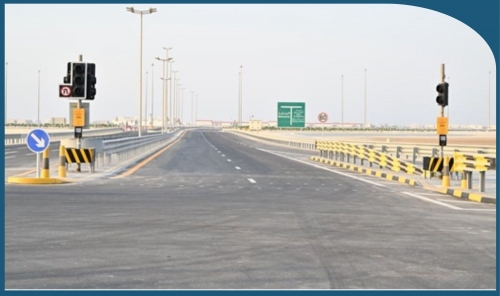
Ria Street Transformation: From 1,900 to 4,000 Vehicles Per Hour
haikh Mishal bin Mohammed Al Khalifa, Undersecretary of the Ministry of Works, conducted a field visit to Ria Street in Muharraq to inspect four recently completed infrastructure development projects aimed at enhancing traffic flow and road safety in the area. The visit included Engineer Ahmed Sami Al-Tajer, Assistant Undersecretary for Roads, along with several ministry engineers.
The Undersecretary highlighted that the projects are part of the Ministry’s ongoing efforts to modernize Bahrain’s road network, improve traffic efficiency, and ensure safer travel on major roads.
The first phase of the Ria Street development (Phase 1B) involved upgrading the 1.4-kilometer section between Street 12 and Street 38 in the Qalali area. The works transformed the road into a dual carriageway with two lanes in each direction, added two new traffic signals, pedestrian pathways, and parking facilities. These improvements increased the road’s capacity from 1,900 vehicles per hour to 4,000 vehicles per hour, significantly easing traffic near Bahrain International Airport and improving connectivity with surrounding areas.
Another project focused on creating a new entrance on Street 38 and upgrading its intersection with Ria Street, enhancing access to the airport’s cargo zone and improving links between neighboring districts through a new traffic signal.
The road linking Muharraq Ring Road and Ria Street, featuring two signalized intersections, forms part of the larger Muharraq Ring Road development and has improved traffic flow between Muharraq and Manama, marking it as a key national infrastructure initiative.
The visit also covered the upgraded intersection of Street 20 with Road 2651 at Busaiteen, where a new traffic signal has helped streamline traffic toward Ria Street.
All projects included the installation of rainwater drainage systems, pedestrian sidewalks, improved street lighting, road markings, and signage to enhance safety. In addition, infrastructure services were relocated and protected, with underground ducts prepared for future utility use.
Related Posts