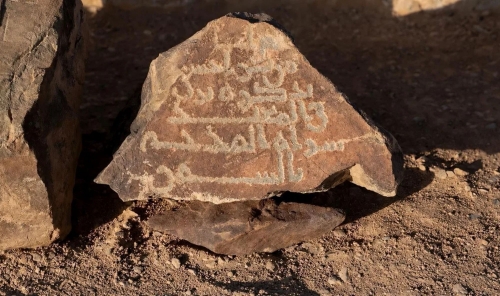
The Heritage Commission has completed the fourth season of its archaeological excavation project at the Al-Ma’mala site in the Baha region, as part of ongoing efforts to preserve the Kingdom’s national heritage and document its archaeological and architectural diversity.
Al-Ma’mala is considered one of the region’s significant archaeological sites and was historically used for extracting mineral ores, including gold, silver and copper. Archaeological remains and tools discovered at the site provide evidence of mining activities spanning different historical periods.
The exploitation of mineral resources helped establish Al-Ma’mala as an important economic centre during the Islamic era, drawing artisans and workers involved in various trades, including metal merchants and labourers.
Samples collected during earlier excavation seasons indicate that mining at the site began as early as the pre-Islamic period. Laboratory analysis showed that mining activity expanded significantly from the late sixth century through the ninth century, covering both the pre-Islamic and medieval Islamic periods.
The Heritage Commission reaffirmed its commitment to conducting archaeological surveys and excavation projects across the Kingdom, while strengthening systems for documenting, preserving and protecting archaeological discoveries.
The commission said these efforts are aimed at safeguarding the Kingdom’s cultural heritage and civilizational identity and ensuring that important archaeological evidence is preserved for future generations.