

US Offers $100m for CJNG Leaders
Rewards target eight leaders and associates, while visa restrictions have been imposed on 65 people linked to the cartel.
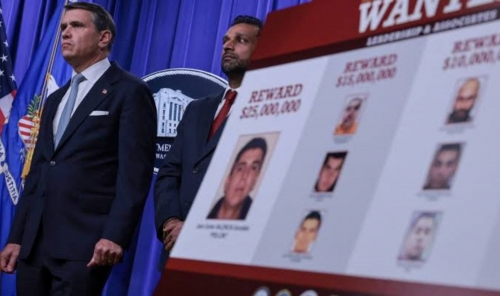
The United States has announced more than $100 million in rewards for information leading to the arrest or conviction of eight leaders, associates and accomplices of the Cártel de Jalisco Nueva Generación (CJNG).
Michael C. Gonzales, Deputy Assistant Secretary for International Narcotics and Law Enforcement Affairs, said the move was part of the US government’s efforts to target what it described as narco-terrorist cartels.
A $25 million reward has been offered for Juan Carlos Valencia Gonzalez, also known as Pelón, identified by the US State Department as the leader of CJNG. Gonzales said Pelón rose to power following the death of the cartel’s former boss, El Mencho.
The State Department said seven additional rewards, ranging from $2 million to $15 million each, were announced for other high-ranking CJNG members.
Gonzales said the rewards are being offered through the Department of State’s Narcotic Rewards Program and Transnational Organized Crime Rewards Program. He said the programmes have helped US law enforcement identify and bring to justice more than 90 major criminals, with more than $200 million paid in rewards.
The State Department has also imposed visa restrictions on 65 individuals described as family members or close associates of people linked to the cartel. Of these, 26 had existing US visas, which have now been revoked.
Gonzales said the United States would work closely with Mexican authorities to identify, capture and bring the targeted individuals to justice. He added that the rewards are valid for information leading to arrests and convictions anywhere in the world.
He said the United States was pursuing all cartels and narco-terrorist organisations that pose a threat, but described CJNG as currently posing the “most significant, severe, and immediate threat” to US interests. He added that the United States was continuing to target the Sinaloa cartel and other organisations.
Gonzales said US authorities maintain partnerships with law enforcement agencies in Mexico and other countries, including Guatemala, and would use those relationships to pursue the targeted individuals wherever they may be located.
He also said informants providing information through the rewards programmes are protected, with details concerning their identity, protection and connection to the reward programme kept closely held.
On cooperation with Mexico, Gonzales said the United States recognises President Claudia Sheinbaum’s commitment to combating illicit drugs and fentanyl production and increasing seizures. He said Mexico had supported what he described as historic transfers and apprehensions of criminals and narco-terrorists, while adding that more needed to be done to address shared threats.
Gonzales said the United States would continue working with Mexican authorities to strengthen security cooperation, law enforcement operations and criminal prosecutions, while pursuing policies aimed at encouraging stronger and faster action against drug production and trafficking.
On possible changes to US travel advisories for Mexico, including Jalisco, Gonzales said the State Department was constantly reviewing conditions and would adjust its advice based on developments on the ground. He said he was not aware of any immediate reaction that would warrant a change at the time of the briefing.
Related Posts