

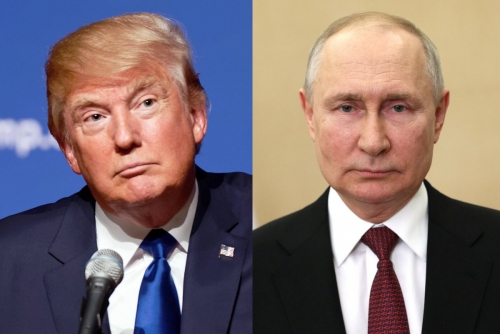
Nuclear Arms Race Fears Surge as US-Russia Treaty Expires
Email: online@newsofbahrain.com
Washington : The expiration of the New Strategic Arms Reduction Treaty (New START) between the United States and Russia on February 5, 2026 has triggered widespread concern among diplomats, security experts and arms control advocates, who warn that the world may be entering a new era of nuclear competition absent longstanding constraints on the world’s two largest nuclear arsenals.
New START, originally signed in 2010 and extended in 2021, had placed verifiable limits on the number of deployed strategic nuclear warheads and delivery systems for both the U.S. and Russia, and included inspections and data exchanges to foster transparency. Its lapse marks the first time in decades that no binding bilateral arms control agreement governs the nuclear balance between the two powers.
With the treaty no longer in force, limits on the number of deployed intercontinental ballistic missiles (ICBMs), submarine-launched ballistic missiles (SLBMs) and heavy bombers equipped for nuclear missions have vanished. Critics fear this could embolden both nations to increase their warhead deployments and modernize delivery systems without agreed caps, raising the specter of an arms race not seen since the Cold War era.
Kremlin representatives have underscored the changing landscape. Moscow has publicly stated that, without binding obligations, neither side is restricted by the treaty’s former limits, and suggested that both the U.S. and Russia may pursue strategic enhancements if deemed necessary for national security.
The United States, meanwhile, has indicated interest in a broader negotiating framework that could ultimately involve other nuclear powers, including China which has a far smaller but growing arsenal and has so far resisted joining arms control agreements. However, no new treaty or extension has been formalized.
Analysts warn the expiration of New START could have ripple effects far beyond Washington and Moscow. Without a mutual framework for inspections and verified limits, misunderstandings or miscalculations between nuclear-armed states may be harder to prevent. Some experts are particularly troubled by the potential for a three-way arms competition involving China, which is rapidly expanding its nuclear capabilities, alongside the U.S. and Russia.
The lapse has also drawn attention from international figures and institutions emphasizing diplomatic urgency. Pope Leo appealed to both countries not to abandon the treaty, urging leaders to replace fear and distrust with cooperation. The United Nations has described the treaty’s end as a “grave moment” for global peace and security, stressing the importance of renewed negotiations to prevent uncontrolled proliferation and reduce nuclear risks.
Tributes to the treaty’s historic role stretch back through more than half a century of Cold War-era arms control and reductions, beginning with earlier START agreements that helped to defuse some of the tensest moments of nuclear competition. Its termination highlights the shifting dynamics of international security and reflects the breakdown of traditional arms-control mechanisms amid geopolitical tensions and competing strategic priorities.
As New START expires without a successor framework, the world stands at a critical juncture one in which increased nuclear deployments, reduced transparency and heightened mistrust among major powers could reshape global defence postures and raise uncertainty over the future of strategic stability.
Related Posts