

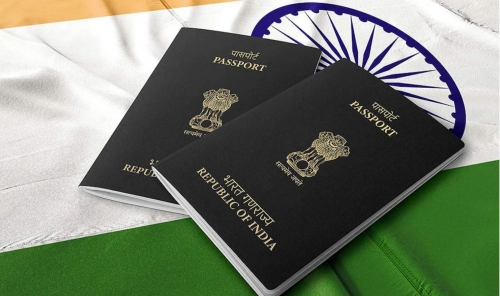
India’s High-Security e-Passport Goes Live: Here’s What’s Inside the Chip
TDT | Manama
Email : editor@newsofbahrain.com
In a significant leap towards modernizing travel documentation, India has begun the phased rollout of its new e-passports, which feature advanced electronic chips for improved security and faster immigration processing. The initiative is part of the Passport Seva Programme (PSP) Version 2.0, launched on April 1, 2024, by the Ministry of External Affairs (MEA).
These next-generation passports are now being issued in select cities and will be available across all Passport Seva Kendras (PSKs) and Post Office Passport Seva Kendras (POPSKs) by the end of 2025, the MEA has confirmed.
🔹 What Is an E-Passport?
An e-passport is a regular passport booklet embedded with a Radio Frequency Identification (RFID) chip and antenna, located inside the back cover. This chip securely stores the holder’s biometric data, including a digital photograph and fingerprints, along with personal information. This allows for quick, secure, and contactless identity verification at immigration checkpoints, especially at automated e-gates in major international airports.
A gold RFID chip logo on the front cover distinguishes e-passports from traditional ones.
🔹 Key Features & Benefits
-
Enhanced Security: The RFID chip uses Public Key Infrastructure (PKI) to prevent tampering, cloning, or identity theft.
-
Faster Immigration: Travelers using e-passports can pass through automated e-gates, reducing wait times and minimizing manual checks.
-
Global Compatibility: E-passports comply with International Civil Aviation Organization (ICAO) standards, facilitating smoother travel across borders.
-
Reduced Fraud: Digitally signed data stored on the chip makes counterfeiting extremely difficult.
🔹 How to Apply for an E-Passport
The application process remains the same as for a traditional passport:
-
Register on the Passport Seva Portal.
-
Log in with your user credentials.
-
Choose “Apply for Fresh Passport/Re-issue.”
-
Complete the online form and pay the application fee.
-
Schedule an appointment at the nearest PSK or POPSK.
-
Visit the center with original documents and submit biometric data.
-
Once approved, the e-passport is delivered to your registered address.
🔹 Where Are E-Passports Currently Available?
As of now, e-passports are being issued at regional Passport Offices in cities including:
-
Delhi
-
Chennai
-
Hyderabad
-
Jaipur
-
Surat
-
Bhubaneswar
-
Goa
-
Ranchi
-
Nagpur
-
Shimla
-
Amritsar
-
Jammu
-
Raipur
This list will expand progressively as the program is scaled up nationwide.
🔹 What About Existing Passports?
According to the MEA, existing non-electronic passports remain valid until their date of expiry. There is currently no mandate to upgrade to an e-passport, and citizens can continue to use their traditional passports unless they opt for a new or reissued one under the e-passport system.
🔹 India Joins Global Trend
With this launch, India joins countries like the United States, UK, Canada, Germany, France, Brazil, and Australia, which have already adopted biometric e-passport systems. The global shift toward electronic travel documents is part of broader efforts to ensure border security, enhance traveller convenience, and support digital governance.
✈️ Looking Ahead
The implementation of e-passports is expected to revolutionize international travel for Indian citizens by reducing bottlenecks at immigration and improving security protocols. As adoption increases, Indian travelers can expect more seamless experiences at global airports that support biometric verification.
For more information or to begin your application, visit the official Passport Seva Portal.
Related Posts