

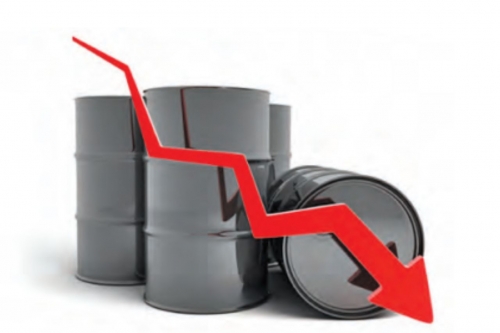
Oil plunges, stocks jump on US-Iran peace deal
TDT | Manama
Email: mail@newsofbahrain.com
Global markets rallied on Monday while oil prices recorded sharp losses after the United States and Iran reached a framework agreement aimed at ending months of conflict in the Middle East and restoring the flow of oil through the Strait of Hormuz, one of the world's most important energy corridors.
The breakthrough agreement, described as a memorandum of understanding, is expected to be formally signed in Switzerland on Friday. Investors welcomed the development as a major step toward stabilizing a region that has experienced heightened tensions and military confrontations over the past three months.
The conflict had significantly disrupted global energy markets after Iran effectively closed the Strait of Hormuz following US and Israeli strikes on Iranian targets in late February. The strategic waterway handles nearly one-fifth of the world's crude oil shipments, making any disruption a major concern for global energy security and economic stability.
As news of the agreement emerged, oil prices fell by around five percent, moving closer to the $80-per-barrel mark. The decline comes after crude prices had surged above $110 per barrel during the height of the conflict, fueling fears of rising inflation and increased costs for businesses and consumers worldwide.
Financial markets responded positively to the easing of geopolitical tensions. Wall Street posted strong gains, led by technology stocks. The Nasdaq index outperformed broader markets, while SpaceX shares rose another eight percent following the company's landmark $75 billion initial public offering, further boosting investor sentiment.
Asian stock markets recorded some of the strongest gains of the day. Tokyo and Seoul surged by approximately five percent each, supported by increased investment in technology and growth-oriented sectors. European markets also advanced, with major indexes in Paris and Frankfurt ending higher. However, London's FTSE 100 underperformed as falling oil prices weighed heavily on energy companies listed on the exchange.
Market analysts noted that while the peace agreement has reduced immediate concerns over energy supply disruptions, challenges remain. Russ Mould, Investment Director at AJ Bell, said markets had already recovered significantly in recent weeks and warned that inflation concerns would not disappear overnight despite lower oil prices.
Iran's Deputy Foreign Minister Kazem Gharibabadi described the agreement as bringing an "immediate end" to the conflict. He added that negotiations toward a comprehensive final settlement would continue over the next two months, suggesting that diplomatic efforts are far from complete.
US President Donald Trump celebrated the announcement on Sunday, declaring that the agreement with Iran had been finalized and calling for the resumption of global oil shipments. His remarks further reinforced market optimism that a prolonged regional conflict may have been avoided.
Attention is now turning to major central bank meetings scheduled for this week. The US Federal Reserve and the Bank of England are widely expected to keep interest rates unchanged as policymakers assess whether easing geopolitical tensions will help reduce inflationary pressures.
Investors will closely watch comments from Federal Reserve Chairman Kevin Warsh regarding the future direction of monetary policy. Meanwhile, the Bank of Japan is expected to continue tightening policy by raising borrowing costs following recent moves by the European Central Bank.
Although questions remain about the details of the US-Iran agreement, global markets have welcomed the prospect of stability returning to a region that plays a crucial role in the world's energy supply. The development has raised hopes for lower fuel costs, reduced inflationary pressures, and stronger economic growth in the months ahead.
Related Posts