

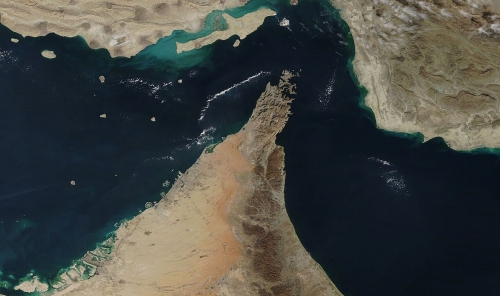
Bahrain Rejects Hormuz Talks With Iran
The Kingdom of Bahrain will not participate in a proposed ministerial meeting on developments in the Strait of Hormuz and will not take part in any collective meeting involving Iran until diplomatic relations between the two countries are restored, the Ministry of Foreign Affairs said.
The ministry said the position had previously been conveyed to the Sultanate of Oman through official channels, stressing that it does not diminish Bahrain’s appreciation for Oman’s sincere efforts or its commitment to dialogue as a means of resolving disputes.
The ministry said dialogue must be based on facts, noting that Bahrain had been subjected to attacks targeting its infrastructure and civilian sites. One such attack, which targeted an ammonia storage tank, came close to causing a widespread catastrophe, it said.
The ministry also pointed to Friday’s targeting of the East-West oil pipeline in neighbouring Saudi Arabia, saying the incident further demonstrated that attacks on civilian and economic facilities remain an immediate threat rather than a matter of the past.
“Regional security and stability cannot be built by overlooking attacks, purchased through silence over their consequences, or protected through a policy of appeasement,” the ministry said.
Bahrain, it added, remains committed to good neighbourliness as a legal obligation rather than a political courtesy.
The ministry said peace must rest on four essential principles: an end to attacks; the establishment of international responsibility for them and compensation for the resulting damage; respect for the sovereignty of states and a prohibition on using the territory of any country as a launch point for attacks against its neighbours; and the settlement of outstanding issues through legal means.
The ministry also reaffirmed Bahrain’s position that any arrangement concerning navigation through the Strait of Hormuz must be based on the 1982 United Nations Convention on the Law of the Sea.
Such an arrangement, it said, should be adopted by the International Maritime Organization, safeguard the right of innocent and transit passage for all vessels without discrimination, fees or permits, and involve all Gulf Cooperation Council countries given the direct link between the security of the waterway and the security of their supplies.
Related Posts