

NIHR Report Documents Iranian Attacks on Bahrain
12-Chapter Study Details Impact on Civilians and Infrastructure
TDT | Manama
Email: mail@newsofbahrain.com
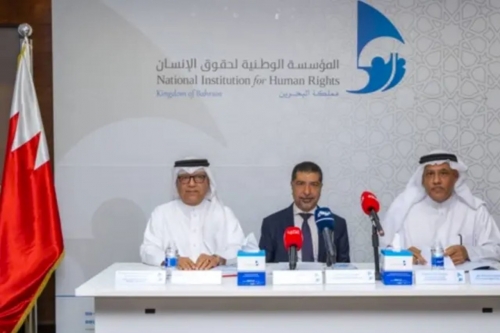
National Institution for Human Rights (NIHR) launched a report documenting the human rights violations and effects stemming from Iranian attacks on the kingdom. It was unveiled at a press conference attended by the institution's chairperson and commissioners, its secretary-general, and media members.
Eng Ali Ahmed Al Derazi, NIHR's chairperson, said the report was prepared under the institution's legal mandate to monitor human rights conditions, document violations and analyse their impact, in line with the Constitution, national law and international standards. The attacks, he said, represented an exceptional challenge that demanded documentation from a legal, humanitarian and human rights perspective, both to preserve national memory and to highlight efforts made to protect civilians and keep essential services running.
The report has 12 main chapters, starting with the legal and methodological framework used for monitoring and documentation, before moving through state obligations and the humanitarian and rights impact of the attacks. It draws on field visits and interviews carried out by the institution and closes with a set of recommendations. Al Derazi also singled out the Committee for Documenting the National Resilience Epic, established by royal order, for its work recording the attacks and the challenges Bahrain faced, as well as the resilience and public solidarity shown throughout.
Dr. Malallah Al Hammadi, NIHR's vice chairperson and head of its Detention and Facilities Visitation Committee, walked through the report's recommendations, which are grouped into three levels spanning national and international measures and broader steps to strengthen human rights protection. These include expanded psychological and social support for the worst-affected groups, stronger protection for infrastructure and digital space, and greater use of legal and diplomatic channels abroad, including closer cooperation with United Nations mechanisms to document violations and support accountability.
Commissioner Mohamed Juma Fuzaia, who heads the General Rights and Freedoms Committee, set out the report's key findings. It tracks the direct and indirect effects of the attacks across the kingdom, he said, with particular attention to the impact on women, children, the elderly, people with disabilities and workers in vital sectors.
The findings, he added, rest on a methodology built around accuracy, objectivity, independence and transparency, drawing on official sources, international documents, field visits and direct interviews.
NIHR described the report as a national human rights document meant to support efforts at home and abroad to protect human rights and reinforce respect for international law. The full report and an executive summary are available in Arabic and English on the institution's website.
Related Posts