

Labour market shifts from recruitment to retention
TDT | Manama
Email: mail@newsofbahrain.com
Bahrain issued fewer new work permits in 2025 as employers increasingly renewed existing workers and relied more on labour already inside the Kingdom, according to figures released by the Labour Market Regulatory Authority (LMRA).
New work permits fell by 10.1 per cent to 159,759 last year, down from 177,659 in 2024, a drop of 17,900 permits.
Despite the decline in new recruitment, the number of active work permits held by non-Bahrainis edged up by 1.8pc to 654,672 at the end of 2025, indicating only modest growth in the foreign workforce.
Permit renewals
The strongest increase came from permit renewals, which rose by 11.2pc to 577,730. Labour permit renewals accounted for 502,808 of the total, while investor permit renewals reached 15,075 and dependant permit renewals stood at 59,847.
Labour mobility within Bahrain also increased. Local labour transfers climbed by 13.9pc to 81,471, suggesting employers were increasingly filling vacancies with workers already present in the market rather than recruiting from abroad.
Permit cancellations requested during the year totalled 116,006, including 98,025 labour permits, 1,861 investor permits and 16,120 dependant permits.
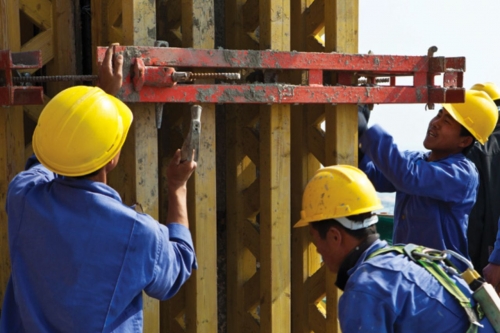
Construction remained the largest source of new labour demand, accounting for 20.4pc of new labour permits issued in 2025. Wholesale and retail trade followed with 19.2pc, while accommodation and food services made up 13.4pc. Together, the three sectors accounted for more than half of all new labour permits.
Recruitment
Domestic worker recruitment continued to grow, with new permits rising by 7.4pc to 34,557 and renewals increasing by 10pc to 28,721.
Overall, the figures point to a labour market increasingly focused on retaining and reallocating workers already in Bahrain, rather than expanding through large-scale new overseas recruitment. The trend comes as Bahrain continues efforts to boost employment opportunities for citizens while allowing foreign hiring in sectors facing labour shortages.
Related Posts