

EU and Bahrain Partner to Upgrade National Museum & Qal’at Al-Bahrain
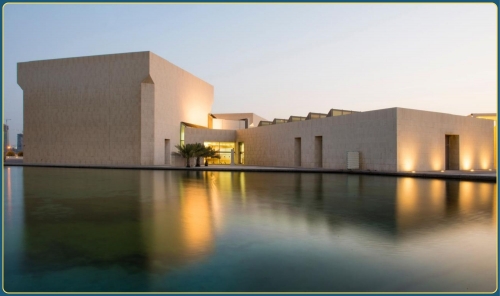
The European Union (EU) and the Bahrain Authority for Culture and Antiquities (BACA) have announced a joint roadmap aimed at enhancing two of Bahrain’s most treasured heritage landmarks: the Bahrain National Museum and Al Qal’at Al-Bahrain, a UNESCO World Heritage Site.
The partnership outlines a shared vision for cultural preservation, museum modernization, and professional capacity-building. By combining the EU’s technical expertise with BACA’s deep local knowledge, the initiative will introduce state-of-the-art museum technologies, advanced conservation techniques, and expanded exhibition spaces.
As part of the collaboration, an EU expert mission engaged with key stakeholders, government officials, and museum staff to develop the roadmap. The mission focused on international standards in cultural heritage, archaeology, conservation, and museum management—covering areas such as collections management, storage conditions, information systems, conservation, and restoration strategies.
Highlighting the significance of the initiative, EU Ambassador to Bahrain, Christophe Farnaud, said:
"The European Union is proud to partner with the Bahrain Authority for Culture and Antiquities to enhance the Bahrain National Museum and Al Qal’at al-Bahrain Site. These landmarks embody Bahrain’s rich heritage and its enduring role as a crossroads of civilizations. Through this collaboration, we aim to combine innovation and preservation – ensuring that Bahrain’s story continues to inspire future generations."
Ms. Haya Ahmed Al-Sada, Director of Museums at BACA, added:
"It is through meaningful collaborations like this that we can develop sustainable strategies, enhance our museums, and ensure that sites like the Bahrain National Museum and Qal’at Al-Bahrain resonate both nationally and internationally. We look forward to implementing this plan in the medium term."
The Bahrain National Museum, inaugurated by the late Amir H.H. Shaikh Isa Bin Salman Al-Khalifa in December 1988, remains one of the Gulf region’s most distinguished museums. Al Qal’at Al-Bahrain – Ancient Harbour and Capital of Dilmun, opened in February 2008, preserves Bahrain’s ancient history while showcasing archaeological artefacts from the site. The fort, part of the Qal’at Al-Bahrain Site, has been recognized as a UNESCO World Heritage Site since 2005 and stands as a key historical and cultural landmark in the GCC region.
This joint roadmap reinforces the EU’s broader engagement with Gulf countries through the EU–GCC Outreach Facility, underlining the growing role of cultural diplomacy in strengthening mutual understanding and fostering long-term partnerships.
Related Posts