

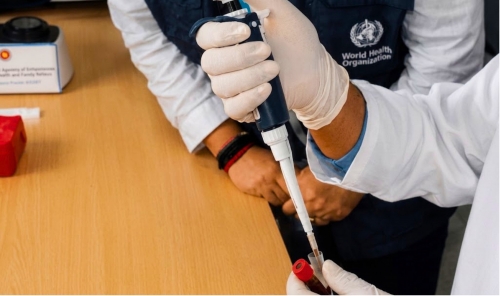
WHO Calls for Action to End Hepatitis Barriers
Millions Still Lack Access to Lifesaving Hepatitis Testing and Treatment Across Eastern Mediterranean Region
The World Health Organization (WHO) Eastern Mediterranean Region has called for stronger action to remove barriers preventing people from accessing lifesaving hepatitis prevention, diagnosis and treatment services on World Hepatitis Day.
Under this year’s theme, “Hepatitis: Let’s break it down,” WHO highlighted the need to tackle challenges including high costs, stigma and unequal access to healthcare that continue to leave millions without essential services.
Hepatitis remains a major public health concern in the region, causing preventable illness, liver disease and cancer. According to the Global Hepatitis Report 2026, an estimated 16 million people were living with hepatitis B and 12 million with hepatitis C in 2024, contributing to nearly 97,000 deaths.
Progress Made, But Gaps Remain
WHO reported that new hepatitis C infections in the region have declined by 28% since 2015, largely due to Egypt’s national hepatitis C elimination campaign and efforts in countries including Morocco and Pakistan.
Hepatitis B infections among children under five have also decreased due to expanded immunisation programmes.
However, significant challenges remain. The Eastern Mediterranean Region continues to account for nearly one-quarter of global hepatitis C infections.
The 2026 report found that only 44% of people living with hepatitis C have been diagnosed, while just 31% receive treatment. The situation is more critical for hepatitis B, with less than 2% of patients receiving the required treatment.
Strengthening Prevention and Healthcare Access
WHO said unsafe medical injections contribute to around 14% of new hepatitis C infections in some countries, while low coverage of hepatitis B birth-dose vaccination — currently at 42% — remains a major prevention challenge.
The organisation stressed the importance of integrating hepatitis services into wider healthcare systems, improving testing and diagnosis, expanding vaccination programmes and preventing mother-to-child transmission.
WHO Regional Director for the Eastern Mediterranean, Dr Hanan Balkhy, said communities and civil society organisations play a vital role in reducing stigma, raising awareness and reaching vulnerable populations.
“Communities and civil society are at the heart of the response. They reduce stigma, raise awareness, reach underserved populations and work alongside ministries of health to ensure no one is left behind,” Dr Balkhy said.
Push Towards 2030 Elimination Goals
WHO called for stronger political commitment, continued investment and global partnerships to accelerate progress towards its 2030 targets of reducing new hepatitis infections by 90% and deaths by 65%.
“By breaking down the barriers that remain, together we can eliminate viral hepatitis as a public health threat,” Dr Balkhy said.
The organisation stressed that expanding access to prevention, testing, treatment and care will be essential to achieving a future free from viral hepatitis.
Related Posts