

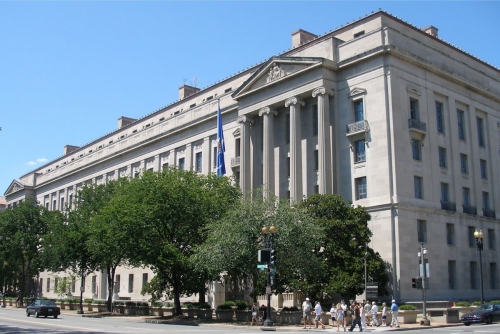
US widens drive to revoke citizenship of foreign-born Americans
Email: online@newsofbahrain.com
WASHINGTON DC: The U.S. Department of Justice has announced a significant expansion in its efforts to revoke the citizenship of naturalized Americans, a legal process known as denaturalization.
While historically a rare procedure used roughly a dozen times per year, the current administration has signaled a strategic shift, treating it as a primary tool for immigration enforcement. This latest wave of filings targets individuals accused of serious misconduct, ranging from financial fraud to alleged links with terrorism and war crimes.
Central to these new cases is the allegation that defendants concealed material facts or engaged in disqualifying conduct during their original immigration proceedings. For instance, the Justice Department recently initiated proceedings against an Indian-origin businessman accused of orchestrating a $2.5 million investment fraud scheme. Officials contend that because the alleged criminal activity preceded his naturalization and involved misrepresentations during the application process, his citizenship was obtained under false pretenses and is therefore subject to revocation.
The legal threshold for denaturalization remains exceptionally high. Because citizenship is a fundamental right, the government must provide "clear, unequivocal, and convincing" evidence in federal court that an individual intentionally misrepresented their history.
This rigorous standard is intended to prevent the arbitrary removal of rights; however, the increased volume of cases suggests a more aggressive interpretation of what constitutes "material concealment."
Beyond the courtroom, this policy shift has profound social implications. Civil liberties advocates argue that the broad application of denaturalization creates a climate of uncertainty and fear within immigrant communities.
By potentially reopening cases that were settled decades ago, critics suggest the policy undermines the sense of permanent security that naturalization is supposed to provide. As the Justice Department continues to coordinate with U.S. Citizenship and Immigration Services (USCIS) to review historical files, the legal and social debate over the permanence of American citizenship is likely to intensify.
Related Posts