

Qatar deepens UN human rights engagement
TDT | Manama
Email : editor@newsofbahrain.com
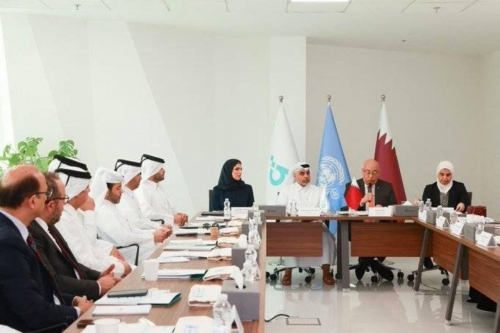
The Qatar Social Work Foundation convened a high-level roundtable in Lusail on Monday focused on strengthening engagement with the United Nations human rights system and enhancing the capacity of social institutions to align with international mechanisms.
Held at the UN House in collaboration with the UN Training and Documentation Centre for South-West Asia and the Arab Region, the meeting brought together senior officials from the foundation, directors of its affiliated centres, and representatives of UN agencies in Qatar.
The discussions centred on how social work institutions can better integrate UN human rights frameworks into their operations, particularly through reporting mechanisms, treaty body engagement, and policy implementation.
Officials said the roundtable aimed to translate international human rights commitments into practical institutional practices within Qatar’s social development sector.
Rashid Mohammed Al Nuaimi, Executive Director of the Qatar Social Work Foundation, described the engagement as a strategic shift in institutional thinking.
“Working within the UN human rights system is now an extension of our national and developmental responsibility,” he said, adding that the foundation is seeking to build a knowledge-based model of social work with stronger international participation.
He said affiliated centres are being encouraged to play a more active role in national reporting processes and global monitoring frameworks, reflecting Qatar’s social development efforts within international standards.
Abeer Al Khreisha, Director of the UN Training and Documentation Centre, said the initiative builds on years of cooperation aimed at strengthening technical capacity and improving engagement with UN treaty bodies.
She said the programme supports Qatar’s efforts to implement its international obligations in the field of human rights.
UNDP Resident Representative in Qatar Biplov Choudhary welcomed the dialogue, calling it an important step in improving coordination across UN agencies and supporting sustainable development goals through stronger institutional capacity.
The session included an overview of the UN human rights architecture, including the roles of the Office of the High Commissioner for Human Rights and the Economic and Social Council, where the foundation holds consultative status.
Participants also reviewed key international conventions, including those on women’s rights, child rights, and persons with disabilities, alongside mechanisms for national reporting and engagement with treaty bodies.
Related Posts