

Italy hosts Libya unity talks
Italy and the United States hosted talks on Sunday to press Libya's divided political factions to quickly sign up to a United Nations-backed peace agreement.
Western capitals fear that unless Libya forms a united government on Wednesday the Islamic State group will strengthen its grip on their new coastal territory.
And, without a recognised central authority and amid ongoing faction-fighting, Libya could once again become a major source of refugees and migrants headed for Europe.
Foreign Minister Paolo Gentiloni welcomed Secretary of State John Kerry, UN Libya envoy Martin Kobler and 18 European and Arab ministers to the foreign ministry in Rome.
After the international talks in the morning, the envoys were to meet with representatives of Libya's divided political factions to urge them to reunite their country.
"We have to demonstrate that the action of governments and diplomacy can be faster and more effective than the threat of terrorism which we face here," Gentiloni said last week.
"We cannot allow it to develop and we have to back our ability to stop it with a negotiated approach involving the Libyan parties," he said, at a regional security conference.
After Libyan political representatives had agreed to sign a version of the UN-mediated deal on Wednesday, he said, the Rome talks are supposed to show international solidarity.
A senior US official told reporters travelling with Kerry that the meeting would "provide framing and momentum for the signing ceremony" to take place in Morocco.
The United Nations deal has the benefit of unifying the negotiation process and has the support of the regional powers supporting rival factions in Libya's conflicts.
For these reasons, US and Italian officials believe it is time to end the division of Libya between two rival governments and a patchwork of warring factions.
But critics of the process warn that forcing Libyans into a foreign-mediated process could strengthen existing resistance to the pact and undermine future peace efforts.
Former Italian foreign minister Emma Bonino and the head of International Crisis Group Jean-Marie Guehenno called the rush towards a Wednesday signing "an irresponsible bet."
Writing in Politico, the pair said it is "wishful thinking" to believe a majority of Libyans will back a foreign-backed sole national authority.
Under current security conditions it is unlikely, they argue, that such a government could even enter Tripoli safely.
"This means they will have no control over state administration, including the pivotal central bank," they wrote.
"It could trigger renewed fighting for control of the capital."
And any attempt, whether failed or successful, to restore authority to Tripoli could feed separatist rumblings in eastern Libya, they warn.
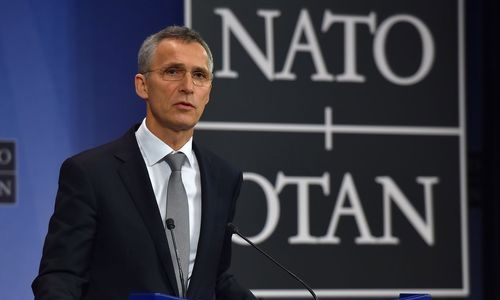
NATO Secretary General Jens Stoltenberg speaks during a Dec. 2 press conference
(Photo: NATO)
Related Posts