

How World Cup 2026 Technology Is Changing Football
TDT | Manama | Email : online@newsofbahrain.com
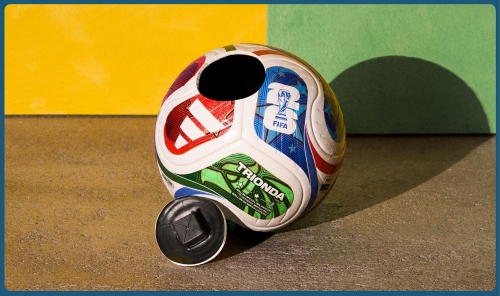
The 2026 FIFA World Cup is expected to feature one of the most technologically advanced match balls in the sport’s history. Designed as part of football’s growing integration with digital systems, the official ball is equipped with internal sensor technology that works alongside next-generation video assistant referee (VAR) systems.
The ball, known as “Trionda,” contains an embedded motion sensor capable of tracking movement hundreds of times per second. This allows it to capture detailed data including speed, spin, direction, trajectory, and the exact moment of contact with a player. The information is transmitted in real time and combined with stadium camera systems to construct a live 3D model of on-field action.
This integrated tracking system is designed to support referees with faster and more precise decision-making, particularly in tight situations such as offside calls. By accurately identifying when the ball is played, it reduces one of the most challenging variables in modern officiating.
The technology is not entirely new. A similar sensor-equipped ball was used during the 2022 World Cup in Qatar as part of FIFA’s semi-automated offside system. However, the 2026 version is expected to process data more quickly and integrate more efficiently with Hawk-Eye tracking and goal-line technology. This could also help reduce delays caused by video assistant referee reviews.
The ball also includes an internal rechargeable battery designed to last through a full match, including extra time. While the idea of charging a football before kickoff may seem unusual, it reflects how deeply data and electronics are becoming embedded in elite sport.
In addition to its internal systems, the ball is expected to feature a redesigned outer structure with fewer panels than previous World Cup designs. Engineers suggest this could improve aerodynamics, flight stability, and consistency in different weather conditions.
Its design is also expected to reflect the identity of the host nations, Canada, Mexico, and the United States. Colour accents in red, green, and blue are likely to appear, along with symbolic imagery such as stars, maple leaves, and eagles.
Not all reactions to this technological direction are positive. Critics argue that increased reliance on digital systems risks slowing the game and reducing its spontaneous human element. Supporters counter that greater accuracy in key decisions is worth the trade-off, especially on football’s biggest stage.
Whatever the debate, the match ball is no longer just equipment. At the 2026 World Cup, it may function as one of the most important data tools on the pitch.
Related Posts