

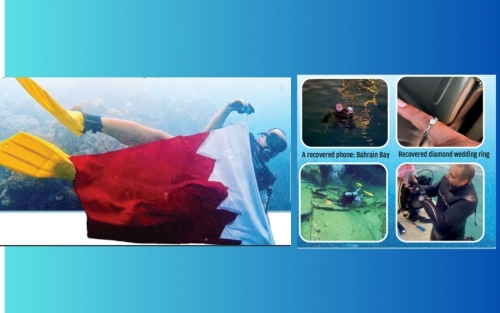
Lost @ sea: Diver recovers 200 phones
Seven in 10 recovered phones still worked
TDT | Manama
Email: mail@newsofbahrain.com
For most people, a mobile phone slipping into the sea is gone for good. But for Captain Abdulaziz Al Hamad, it is often just the start of a search. Over the past seven years, the Bahraini diver has recovered more than 200 phones, with seven out of every 10 still working when returned to their owners.
A certified diving and first-aid instructor, Al Hamad has also recovered bags, passports and other valuables lost during boat trips and beach outings, often returning belongings their owners believed were gone forever.
Some searches are over within 10 minutes. Others keep him underwater for as long as three hours.
Success, he said, depends largely on how accurately the owner can identify where the item entered the water. Knowing the boat’s position, its direction of travel and the exact point where the object fell can dramatically narrow the search.
One call came from a Saudi family whose bag had fallen overboard during a sea trip. Inside were their passports.
Al Hamad searched the area, found the bag and returned the documents.
‘It is a great feeling when people think something is gone for ever and you bring it back,’ he said.
Items whose owners cannot be traced are handed over to the relevant authorities.
Al Hamad has been diving for 14 years. His fascination with the underwater world began when he was 14 after trying scuba diving during a family outing. The experience inspired him to become an instructor.
Requests to recover lost phones came years later. As word spread among boat owners and beachgoers, the calls steadily increased.
Despite the growing demand, he believes patience is one of a diver’s greatest strengths.
‘Diving needs calm’, he said. ‘Most trouble underwater comes from fear or from a diver failing to follow what he was taught.’
Panic, he said, clouds judgement, wastes air and can endanger both the diver and those around them.
He also sought to dispel common fears about sharks and other marine life.
Marine animals do not see divers as prey, he said, but will defend themselves if people venture too close or intrude into their territory.
‘Any sea animal will defend itself in its own area’, he said. ‘The diver must keep a safe distance and show respect.’
Of all the underwater experiences he has had, wreck diving remains his greatest passion.
For Al Hamad, a shipwreck is more than steel resting on the seabed. It is a piece of history that still carries traces of the lives once lived on board.
‘Every wreck has a story’, he said.
One of his most memorable dives was at the Salem Express, the ferry that sank in the Red Sea in 1991.
Personal belongings still scattered around the wreck serve as poignant reminders of the lives lost, turning the dive into a journey through both history and memory.
Over time, the wreck has also become home to coral and marine life, where nature has transformed tragedy into a thriving underwater ecosystem.
Al Hamad said this hidden world is why diving has never felt like just a sport.
It demands patience, discipline and respect for the sea, while offering a glimpse of places that few people will ever have the chance to see.
Related Posts