

Planting the seeds of change
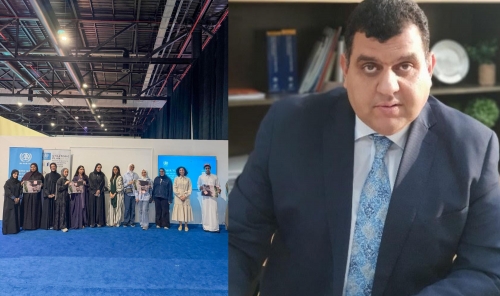
Young participants gained a firsthand understanding of Bahrain's mangrove conservation efforts as Youth City 2030, in collaboration with UN-Habitat, organised a Mangrove Restoration Workshop at the Science and Technology Centre.
The workshop introduced participants to the fundamentals of mangrove rehabilitation and planting through interactive sessions and practical activities, highlighting the role these coastal forests play in protecting the environment and supporting climate resilience.
Participants learned that mangroves are unique trees adapted to thrive where land meets the sea. Beyond supporting biodiversity and marine ecosystems, they act as natural coastal barriers, store significant amounts of carbon and sustain local communities that depend on healthy shorelines.
The session also spotlighted Bahrain's Grey Mangrove (Avicennia marina), the Kingdom's only native mangrove species, and highlighted key habitats such as Tubli Bay and Ras Sanad, where conservation efforts are helping preserve these fragile ecosystems.
"Engaging young people in mangrove conservation is essential to Bahrain's sustainable future. By increasing awareness of mangroves as nature-based solutions that support Bahrain Vision 2030, we empower the next generation to become active partners in protecting Bahrain's natural heritage and building more resilient communities," UN-Habitat GCC Representative and Head of Country Programme in Bahrain, Dr. Ayman El-Hefnawi, told The Daily Tribune.
The workshop also highlighted Bahrain's environmental ambitions, with mangrove restoration forming a key part of the Kingdom's commitment to achieve net zero emissions by 2060 and expand mangrove coverage fourfold by 2035. Tubli Bay currently has around 48 hectares of mangrove forests.
Participants also explored the role of mangroves as natural carbon sinks. Each tree can absorb around 20-25kg of carbon dioxide annually, with much of the carbon stored below ground through its root system. Around 200 mangrove trees are needed to offset the yearly carbon emissions of an average passenger car.
UN-Habitat, which established its Bahrain Country Programme in 2021, works with national partners to advance sustainable urban development and climate resilience in line with the Bahrain Economic Vision 2030, the National Afforestation Plan 2035, the Government Plan 2023-2026, and the Kingdom's Net Zero 2060 goals.
The workshop encouraged participants to see mangroves not just as trees, but as one of Bahrain's most valuable natural assets and a vital part of the kingdom's sustainable future.
Related Posts