

Strong Health in Bahrain’s Pearl Ecosystem
Email: mail@newsofbahrain.com
Bahrain's natural pearl oyster beds remain healthy, with no evidence of widespread depletion following the revival of pearl diving, according to findings released under the Hayrat Project Initiative led by the Bahrain Institute for Pearls and Gemstones (DANAT).
The project, conducted between 2020 and 2023, assessed the condition of Bahrain's pearl oyster beds to determine whether the reintroduction of pearl diving licences had resulted in overharvesting or declining oyster populations.
Led by DANAT in collaboration with the Supreme Council for Environment and fisheries authorities, the project brought together more than 30 Bahraini experts and compared its findings with a national baseline survey conducted in 2012.
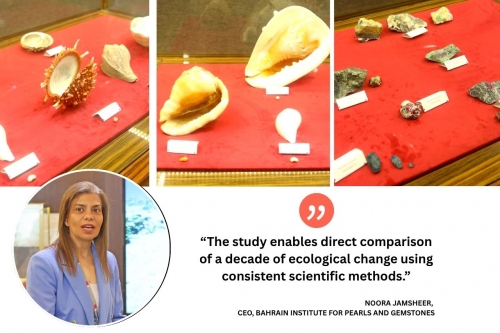
Researchers revisited the same 60 survey stations examined in the earlier study while adding four new nearshore monitoring sites. Using the same scientific methods enabled a direct comparison of changes over the past decade.
Findings
The study found that most pearl oyster beds maintained stable abundance and density, while several locations recorded increases in oyster populations. Only three of the 35 stations surveyed in Hirat Ashteh showed notable declines.
Researchers also observed a shift towards smaller oyster size classes, indicating strong natural recruitment and healthy regeneration, while larger breeding oysters remained present to sustain future populations.
The likelihood of finding natural pearls increased from 3.9 per cent in 2012 to 4.5 per cent, with natural pearl yield improving by around 15 per cent. Water and sediment quality also remained largely unchanged, confirming that Bahrain's marine environment continues to support healthy oyster habitats.
The project also produced Bahrain's first comprehensive documentation and mapping of multiple pearl oyster species, along with associated marine fauna and flora across the surveyed sites, providing valuable new scientific data for conservation planning.
Based on the findings, researchers recommended continued long-term monitoring of pearl oyster beds, greater awareness among licensed pearl divers, protection of breeding-size oysters, and ongoing monitoring of biodiversity, water quality and habitat health.
Speaking to The Daily Tribune at the launch of its 2025 Sustainability Report, DANAT CEO Noora Jamsheer said the institute will continue long-term monitoring of Bahrain's pearl oyster beds, describing the research as critical to ensuring the sustainability of the Kingdom's pearling sector.
The monitoring programme is carried out in collaboration with the Supreme Council for Environment and the Directorate of Fisheries through licensing, scientific research and continuous ecosystem assessments to ensure pearl oyster stocks remain healthy and protected from depletion.
DANAT has already launched its third monitoring cycle, reaffirming its commitment to evidence-based conservation and the long-term sustainability of Bahrain's natural pearl industry.
Related Posts