

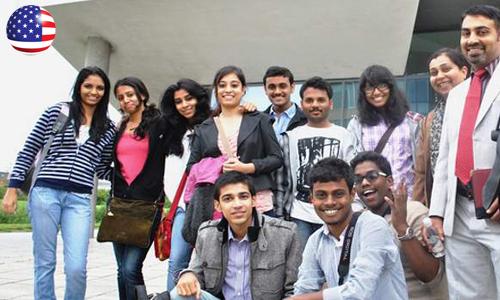
Rich Indian students is best market for foreign universities
Rich Indian kids with poor grades are an attractive market for Indian institutions’ foreign campuses, it has emerged. An undergraduate course might cost $13,000 a year in Dubai, triple the rate at an Indian campus, according to a report in The Economist. But it may be easier to get on to. Vinod Bhat, vice-chancellor of the Manipal Group, a chain of six universities, says 60,000 would-be doctors compete for just 190 places each year in the group’s mother institution in the southern Indian state of Karnataka; but competition is less fierce at its medical school in Pokhara, in Nepal. Ranendra Narayan Saha, who runs the Dubai campus of the Birla Institute of Technology and Science, Pilani (BITS-Pilani) also concedes that foreign branches attract rich Indians who would not make it at home. It opened its Dubai branch in 2000 and plans to grow from 1,800 students to 2,500 in four years. Most are Indians, many of them studying engineering or biotechnology, though he wants more diversity.
So far, the Manipal Group is the most successful of the Indian institutions to have ventured abroad. Founded in 1953, it now has two campuses in Malaysia, which between them have trained one in five of the country’s practising doctors. Manipal also has outposts in Dubai, Antigua and Nepal. “We are looking at South Africa and Sri Lanka with a lot of interest,” says Mr Bhat. “Manipal is beyond an Indian brand,” he argues, because many of its Malaysian students are not ethnic Indians. Nor are all the 4,000 doctors and 6,000 engineers now working in America who graduated from one of Manipal’s campuses worldwide. The Observatory on Borderless Higher Education, a British think-tank, predicts that universities from all parts of the world will have opened 280 campuses outside their home countries by 2020, up from 82 in 2006. Much of the growth is “south-to-south”, such as Indian institutions spreading their wings in Africa and Asia. India’s universities and colleges have another reason to expand abroad: to get good marks in the most prominent international rankings, it is necessary to have a high proportion of foreign students, and opening campuses abroad makes that easier to achieve. BITS-Pilani is a rare case of a private Indian university to have won a place in the Times Higher Education’s global rankings—though only in the lowly 600th-to-800th band. Private-university bosses acknowledge that, for all the reasons to expand abroad, it is no route to quick riches. “We have a ten-to-fifteen-year mindset, we are very patient,” says Amity’s Mr Chauhan. Nevertheless, says Mr Bhat of Manipal, “you have to have the will to look at the world as your market”—while not forgetting the main prize back home.
Meanwhile India’s well-regarded institutes of technology, which are state-run and thus less nimble than private organisations, are so far staying at home. However, Shobha Mishra Ghosh of FICCI, a business lobby group in Delhi, notes that there are a number of private university groups with the “deep pockets” to expand abroad—as a number of them are now doing. The home market is expanding rapidly—by some estimates, as many as 42m Indians may be in further or higher education by 2020. But the field is crowded: more than 35,000 colleges and 700 universities vie for students. So it makes sense also to pursue the 28m people of Indian heritage who live abroad, and the 200,000 Indians who go overseas to study each year.
Image Courtesy : Visa Reporter
Related Posts