

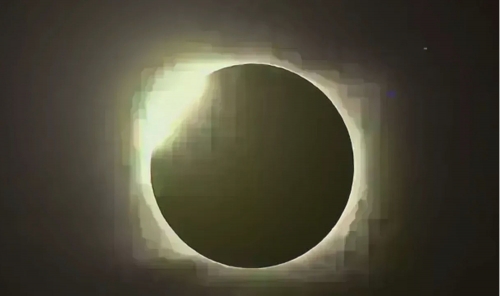
Longest Land Eclipse in 100 Years Set to Cross Europe, Africa, and the Middle East
A breathtaking celestial event is on its way. On August 2, 2027, people across parts of Europe, North Africa, and the Middle East will witness one of the longest total solar eclipses seen from land in over a century.
This rare eclipse will last up to six minutes and 23 seconds — more than double the average duration of most total eclipses, which usually last under three minutes. It's being hailed as a once-in-a-lifetime experience for skywatchers and astronomy lovers around the world.
What’s Happening?
During a total solar eclipse, the Moon moves directly between the Earth and the Sun, casting a shadow and turning day briefly into night. What makes this one so special is its extraordinary length and wide visibility. Experts say it's the longest eclipse to be visible from land between the years 1991 and 2114.
Viewers in the eclipse’s path will get an extended opportunity to see the Sun’s corona — the outer atmosphere that’s usually hidden — and feel the eerie calm of mid-day darkness.
Where You Can See It
The eclipse will begin over the Atlantic Ocean and sweep eastward across parts of Europe, North Africa, and the Middle East, before ending over the Indian Ocean.
Some of the best spots to view the eclipse include:
-
Southern Spain
-
Northern Morocco
-
Algeria, Tunisia, Libya
-
Central Egypt
-
Sudan, Saudi Arabia, Yemen
-
Somalia
In cities like Luxor, Egypt, total darkness will last over six minutes — an ideal location thanks to its typically clear August skies.
Exact timing depends on location. For instance:
-
Southern Spain: Between 1:30 PM and 2:00 PM (CEST)
-
Libya and Egypt: Between 2:00 PM and 2:30 PM (EET)
Unfortunately, India will miss most of the show. Only parts of its far west might catch a faint glimpse of a partial eclipse around sunset.
Why This Eclipse is Unique
Several rare factors come together to make this eclipse extraordinary:
-
Earth will be at aphelion, its farthest point from the Sun, making the Sun appear slightly smaller.
-
At the same time, the Moon will be at perigee, its closest point to Earth, appearing larger than usual.
-
The eclipse path crosses close to the equator, causing the Moon’s shadow to move slower and stretch the duration of totality.
In short, this is not just another eclipse — it’s a spectacular display of cosmic timing. Whether you're a seasoned astronomer or a curious skywatcher, August 2, 2027, is a date worth circling on your calendar.
Make sure you have your eclipse glasses ready, plan your viewing spot, and prepare to witness one of the greatest natural shows of the 21st century.
Related Posts