

President Ilham Aliyev: Azerbaijan’s Expanding Role in Middle Eastern Diplomacy and Energy
The President of the Republic of Azerbaijan, Ilham Aliyev, gave an interview to Saudi Arabia’s “Al Arabiya” television channel. The interview with the Head of State was broadcast on August 26. In this interview, President Aliyev spoke extensively about Azerbaijan’s initiatives in the Middle East and its role in regional cooperation. He emphasized that Azerbaijan has always maintained a just position on the Palestinian issue, firmly supporting the rights of the Palestinian people. In Syria, Azerbaijan’s humanitarian assistance, as well as its energy and infrastructure projects, represent a clear example of its policy of solidarity and brotherhood. Relations with the Gulf Cooperation Council member states have reached the level of strategic partnership, covering fields such as energy, renewables, and agriculture. President Aliyev noted that investments from countries such as the UAE and Saudi Arabia in Azerbaijan demonstrate the tangible results of this cooperation. He added that Azerbaijan’s primary goal is to strengthen peace, security, and sustainable development in the Middle East.
During the interview, President Ilham Aliyev highlighted Azerbaijan’s growing role in the Middle East, with particular emphasis on restoring relations and strengthening cooperation with Syria. He underlined that Azerbaijan’s efforts in this direction are evident both in the field of humanitarian assistance and in joint initiatives in the energy and infrastructure sectors.
For more than a decade, Azerbaijan and Syria had no official ties. The rupture occurred during the Karabakh conflict, when the Syrian government openly supported Armenia. This decision deeply disappointed Baku, given that most Muslim-majority countries backed Azerbaijan’s struggle to restore its territorial integrity, often through the Organization of Islamic Cooperation (OIC).
President Aliyev has repeatedly highlighted the irony of Syria siding with Armenia, a state responsible for the destruction of mosques in occupied Azerbaijani territories, where livestock were kept inside places of worship. Such actions, he stressed, were a profound violation of Islamic values.
The thaw began when a new Syrian government took office. President Aliyev personally met with Syrian officials in Türkiye in April and later welcomed Ahmed al-Sharaa to Baku on an official visit. Shortly afterward, Azerbaijan began providing humanitarian assistance and dispatched a government delegation, led by the Deputy Prime Minister, to Syria to assess reconstruction needs.
Energy cooperation soon followed. Through a framework involving Azerbaijan, Türkiye, Syria, and Qatar, Azerbaijani natural gas began flowing to Syria for electricity generation. On August 2, a formal ceremony marked the launch of this initiative. So far, 1.2 billion cubic meters have been committed, with Aliyev signaling readiness to expand volumes in response to Syrian demand.
President Aliyev, drawing from Azerbaijan’s own experience of occupation and post-war recovery, emphasized that his country’s goal is to promote peace and predictability:
“We want peace around us. As a country that has suffered from aggression and displacement, Azerbaijan understands very well what it means to live without gas, electricity, food, or shelter. If we can contribute even a little to normalization, we are satisfied with that.”
Aliyev pointed out that Azerbaijan’s history — first as an occupied nation, then as a victorious state, and now as a peacebuilder — gives it unique credibility in helping conflicting parties find common ground.
President Aliyev repeatedly stresses that Azerbaijan’s foreign policy rests on the principle of territorial integrity. This position, rooted in its decades-long struggle over Karabakh, extends globally.
From the earliest days of Russia’s invasion of Ukraine, Azerbaijan has supported Kyiv’s sovereignty. Similarly, Aliyev insists that Syria’s unity and central authority are essential preconditions for normalization. He firmly rejects any separatist tendencies, whether in Karabakh, Syria, or elsewhere.
“We are strongly against any form of separatism, whether it was in Karabakh, in Syria, or in any other part of the world,” Aliyev declared.
Energy remains at the heart of Azerbaijan’s international influence. Today, Azerbaijani natural gas reaches ten European countries, including eight EU member states, where it plays a key role in energy security. By 2030, Aliyev has pledged to increase exports by an additional 8 billion cubic meters.
Supplying gas to Syria marked Azerbaijan’s first step into the Middle Eastern energy market. Officials are now considering broader opportunities, including expanding flows through the Arab Gas Pipeline and engaging in swap operations.
At the same time, Azerbaijan has become an active international energy trader, leveraging its role as both a producer and intermediary. President Aliyev stressed that Azerbaijan’s energy potential is “bigger than one can imagine,” pointing to diversification as a major strength.
President Aliyev also highlighted Azerbaijan’s deepening relations with the Gulf Cooperation Council (GCC) countries, especially the UAE and Saudi Arabia. These partnerships are increasingly focused on investment and renewable energy.
By 2030, Azerbaijan expects to generate six gigawatts of solar and wind energy, thanks largely to foreign investment. Emirati and Saudi companies already lead projects in this field. ADNOC, the UAE’s state energy giant, has become a shareholder in one of Azerbaijan’s largest Caspian gas fields, while SOCAR has taken part in oil development projects in the UAE.
Beyond energy and geopolitics, President Aliyev places strong emphasis on Islamic solidarity and unity. At home, Azerbaijan demonstrates a rare example of Shia and Sunni Muslims worshipping together in the same mosques. Religious minorities are also integrated into national life without discrimination.
Ilham Aliyev has warned that sectarian division is one of the greatest threats to the Muslim world. He argues that unity, free from foreign interference, is essential to stability.
“The biggest threat to the Muslim world is sectarian division. Those who advocate such division are doing the most harmful thing. We must be united. We are Muslims, and for us, this is number one,” Aliyev affirmed.
Through international conferences on intercultural and interreligious dialogue, Baku has positioned itself as a hub for promoting tolerance and coexistence. This has earned Azerbaijan recognition from political and religious leaders across the Muslim world.
Under President Ilham Aliyev’s leadership, Azerbaijan has emerged as a diplomatic actor capable of engaging with diverse and even conflicting partners. Its balancing role — maintaining relations with Israel while supporting Syria, expanding ties with the Gulf while remaining a key European energy supplier — sets it apart in a polarized international landscape.
Aliyev’s vision is clear: to leverage Azerbaijan’s experience of war and peace, its growing energy capacity, and its commitment to Islamic solidarity in order to build stability both regionally and globally.
As President Aliyev himself noted, Azerbaijan now carries the rare experience of having been a victim of occupation, a victorious nation, and a peacebuilder. This unique trajectory shapes its ambition to contribute to peace, normalization, and unity in the wider Middle East.
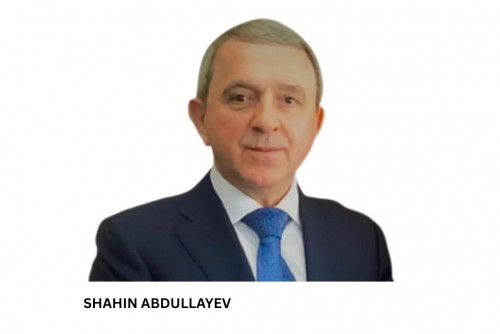
(The author is Azerbaijan’s ambassador to Saudi Arabia. The views and opinions expressed in this article are those of the author and do not necessarily reflect the official policy or position of the Daily Tribune)
Related Posts