

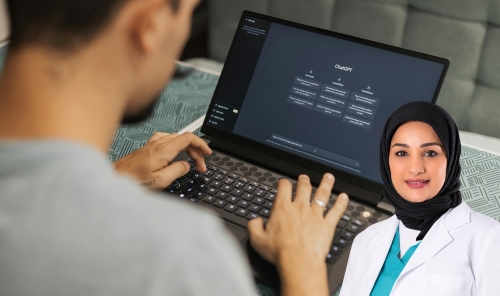
Doctor: Use AI, But Don’t Argue Treatment
Patients once entered the consultation room to describe their symptoms and medical history. Increasingly, ENT consultant Dr Hala Radhi says, some arrive with something else — an answer they have already found online.
“Instead of the patient telling me his medical history and the symptoms he feels, now the patient comes and sits and argues with me,” she said. “I asked ChatGPT and it told me this…”
Patients are increasingly researching their symptoms, collecting medical information and sometimes forming their own conclusions before they have even been examined.
Dr Radhi said the concern is not that patients are educating themselves, but that information from artificial intelligence cannot replace a medical examination.
“Whatever information you find about your medical condition from ChatGPT, remember what it lacks,” she said. “It cannot smell. It cannot feel. It cannot understand the state you are actually in.”
For an ENT specialist, those limitations can be particularly important. A patient may report a sore throat, a change in voice or a blocked ear, but symptoms alone may not reveal the underlying cause.
“You cannot open ChatGPT and tell it your throat hurts and have it ask what you feel, what you are doing,” Dr Radhi said. “It is impossible, and it needs to examine your ear.”
The same applies to patients who arrive convinced that a change in their voice must have a particular cause based on information they have found online.
“You cannot tell ChatGPT your voice has changed and ask what the causes might be, and then come and argue with your doctor about what you saw and read there,” she said.
However, Dr Radhi stressed that patients should not stop educating themselves about their health.
“It is not wrong for a person to educate himself. We like education and we like development,” she said, adding that she herself encourages patients to understand their medical conditions.
The problem, she said, begins when information turns into certainty.
AI chatbots can help patients understand medical terminology, prepare questions for a consultation and learn more about a health condition. But they cannot physically examine a patient, observe their condition or make clinical decisions based on what a doctor sees during an examination.
“But please do not argue with the doctor about the treatment plan because you asked ChatGPT,” Dr Radhi said.
Related Posts