

How Did Bahrainis Once Escape the Summer Heat?
TDT | Manama
Email: mail@newsofbahrain.com
Before air conditioning changed daily life, many Bahrainis had a seasonal way of escaping the summer heat.
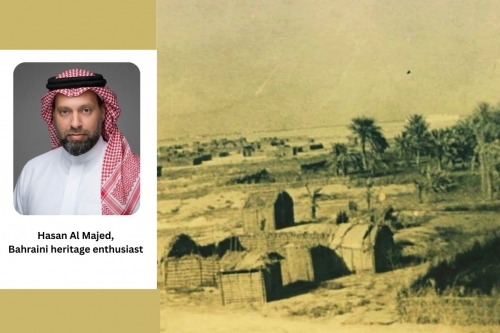
Bahraini heritage enthusiast Hasan Al Majed recalled the story of Al Madha’en Al Saifiya, or summer settlements, describing them as temporary Bahraini towns that once came to life during the hottest months of the year.
According to Al Majed, families moved to these seasonal settlements to escape the coast's heat and humidity.
They were usually located in cooler areas near springs and fresh water, where palm trees, shade and open spaces created a more comfortable environment.
He said the settlements were not merely places to sleep, but complete seasonal communities where families lived, worked, cooked, socialised and adapted to nature.
Temporary homes and kitchens were set up, while small markets, gathering spaces, livestock areas, palm farming and date production formed part of daily life.
Children played outdoors, families held evening gatherings, and traditional activities such as storytelling, poetry and folk games continued late into the night.
Al Majed pointed to several reasons behind the disappearance of these summer settlements, including air conditioning, electricity, modern water networks, urban expansion and improved transport.
With air conditioning, homes became more bearable during summer, reducing the need to move away from the coast.
Electricity changed the rhythm of daily life, and modern water networks reduced reliance on springs and natural water sources.
Urban growth also reduced the agricultural spaces that once suited such seasonal settlements, while easier transport made daily movement between inland and coastal areas more practical.
Al Majed said the summer settlements were more than temporary shelters.
They reflected a way of life shaped by Bahrainis’ understanding of the seasons, the environment and community ties.
He described them as a smart response to harsh weather before modern technology, showing how earlier generations adapted to summer through planning, co-operation and a close connection to nature.
Their story remains a reminder of a Bahrain where entire seasonal communities appeared with the summer, then slowly faded as modern life took hold.
Related Posts