

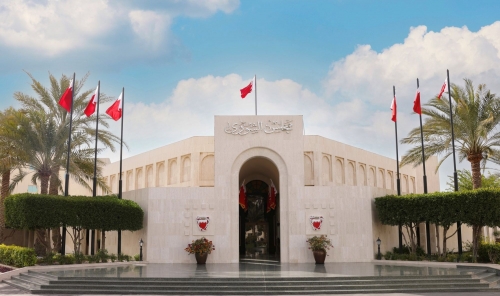
Shura Council set to revisit bill placing private schools under new regulatory law
The Shura Council will return today to a bill that would place private educational institutions under a new law, after the Services Committee backed giving the Ministry of Education stronger powers over licensing, governance and oversight.
The draft, accompanying Decree No. 60 of 2025, would issue a Private Educational Institutions Law made up of six provisions and seven chapters containing 36 articles. It is pitched as a way to regulate education in private providers so it matches national education policy, while supporting a high-quality system that helps develop children and students in a well-rounded way.
Rules
The Services Committee said the bill would update the legal rules for the private education sector and keep pace with changes in the market. It would also separate the regulation of private educational institutions from private training institutions, expand the range of bodies that fall under ministry supervision, and add to the ministry’s powers of inspection and follow-up. Committee members said the proposed law aims to improve the quality and continuity of education outcomes and tighten governance through rules on licensing, management and monitoring.
Investment
It also seeks to encourage responsible investment in education, with a stated aim of balancing the public interest with investors’ rights. The committee said the interests of children, students and parents sit at the centre of the system set out in the bill. In the same sitting, the council is due to look at a separate proposal linked to Parliament’s internal rules, after the Legislative and Legal Affairs Committee backed a change to allow more time for Parliament’s final accounts and audited financial statements to be prepared.
The amendment would revise Article 219 of Decree-Law No. 54 of 2002 on Parliament’s rules of procedure.
Account
The proposal would give the General Secretariat a longer window to prepare the final account, bring the timetable into line with the period used for other government bodies, and reduce the strain caused by the current 30-day deadline.
The committee said this would also give the National Audit Office time to finish checking the figures and hand over the audited statements on schedule. The agenda also includes a traffic-law proposal that has again run into committee opposition. The Foreign Affairs, Defence and National Security Committee has stuck to its earlier recommendation to reject a draft amendment linked to settlement payments for traffic offences.
Fine
The proposal would replace the third paragraph of Article 56 of the Traffic Law (Law No. 23 of 2014) so that an accused person who agrees to settle must pay an amount equal to half the minimum fine for the offence within 30 days from the date the settlement is offered. The committee said the change conflicts with Decree-Law No. 30 of 2025, which raised the fines set for traffic violations in pursuit of general and special deterrence.
It said the amendment also raises questions about proportionality between the offence and the penalty, a core constitutional principle in criminal policy, adding that the recent rise in financial penalties came in response to the danger posed by traffic violations and their impact on lives, property and public order.
Related Posts