

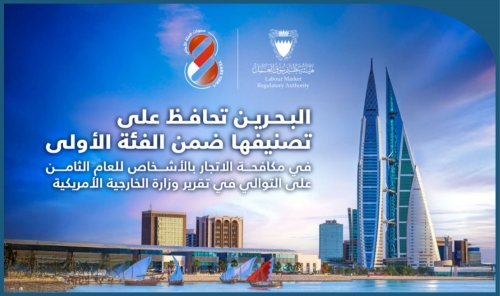
Bahrain Tops U.S. Human Trafficking Report for 8th Year
The Kingdom of Bahrain has achieved yet another milestone in combating human trafficking by maintaining its Tier 1 status for the eighth consecutive year in the U.S. State Department’s annual Trafficking in Persons (TIP) report. This recognition reflects strong international confidence in Bahrain’s sustained efforts to protect human rights and combat trafficking through comprehensive national policies, frameworks, and sustainable mechanisms.
The U.S. State Department’s TIP report, regarded as the leading global reference, evaluates the anti-trafficking efforts of 188 countries and ranks them across three tiers. Tier 1 is reserved for countries fully meeting the minimum standards for the protection of trafficking victims—a level Bahrain has held since 2018 alongside several advanced nations.
Bahrain’s Tier 1 ranking is the result of a deliberate national vision. The Kingdom has proactively developed its labor environment and built a comprehensive system to protect vulnerable groups, implementing sustainable measures rooted in longstanding societal and ethical values.
The Kingdom’s approach relies on a robust legislative and procedural framework, specialized centers, protection and grievance systems, and effective oversight. Awareness campaigns and community partnerships have been intensified, recognizing that prevention begins with knowledge. Many instances of exploitation identified internationally often stem from low awareness of rights and regulations, frequently originating in labor-exporting countries.
Key legal and institutional measures include:
-
Legislation: Laws aligned with international conventions, such as the Labor Law for the Private Sector No. 36 of 2012, the Labor Market Regulation Law No. 19 of 2006, and the Anti-Human Trafficking Law No. 1 of 2008, which defines trafficking, criminalizes it, and prescribes penalties. Bahrain has also ratified relevant international conventions, including the UN Convention against Transnational Organized Crime and its protocols, particularly the Protocol to Prevent, Suppress, and Punish Trafficking in Persons, Especially Women and Children (Law No. 4 of 2004).
-
Institutional Initiatives: The Migrant Workers Protection Center, launched in 2015, is the first specialized, comprehensive center in the Middle East providing preventive, advisory, legal, and shelter services, with a 24/7 multilingual hotline. The National Referral Mechanism, established in 2017, coordinates national efforts to identify victims from the moment a crime is reported, ensuring reintegration or voluntary repatriation in line with national and international standards.
-
Preventive Systems: The Labor Market Regulatory Authority introduced a proactive monitoring department to detect labor exploitation, implemented a wage protection system requiring employers to pay salaries through certified banking channels, and issued International Bank Account Numbers (IBANs) for migrant workers to secure their rights and expedite dispute resolution.
-
Judicial and Support Measures: Bahrain established the region’s first specialized public prosecution for human trafficking cases, a dedicated court, a Victims Support Fund, and offices to protect victims and witnesses. Administrative support is also provided to migrant workers to file labor or civil claims and appeal regulatory decisions free of charge.
-
Awareness and Partnerships: The Authority collaborates with labor-exporting countries, international organizations, and private sector stakeholders. Initiatives include the “Anti-Human Trafficking Forum” and the “Together We Work” program with the International Organization for Migration (IOM) to raise community awareness of labor rights and responsibilities.
-
Capacity Building: Bahrain established the Regional Training and Capacity Building Center to train national personnel across government and private sectors, including police, hospitals, health centers, airports, ports, and judiciary, ensuring the identification and support of victims and the training of trainers and experts.
This recognition underscores Bahrain’s steadfast commitment to humanitarian principles and its continued development of systems to safeguard human dignity and rights.
Related Posts