

Ethiopian New Year: Unveiling the Secret Seven Years Behind
Ethiopia, a land of ancient civilizations and breathtaking landscapes, celebrates its New Year, known as Enkutatash, with vibrant traditions and a unique calendar that sets it apart from the rest of the world. While much of the globe rings in the New Year on January 1st, Ethiopia welcomes the dawn of a new era in September, adding a layer of intrigue and cultural richness to the festivities. But perhaps the most fascinating aspect of the Ethiopian New Year is the revelation that its calendar runs approximately seven years behind the Gregorian calendar, placing the current year as 2017, will celebrate the upcoming new era on September 11, 2025 which make the year 2018.
Enkutatash, meaning "gift of jewels" in the Amharic language, marks the end of the rainy season and the beginning of a period of sunshine and prosperity. The timing is directly linked to the changing seasons. In September, the landscape bursts into bloom as the "Meskel Flower" (Adey Abeba) blankets the fields, symbolizing hope and new beginnings. This floral spectacle coincides with the feast of St. John the Baptist, adding a religious dimension to the celebrations.
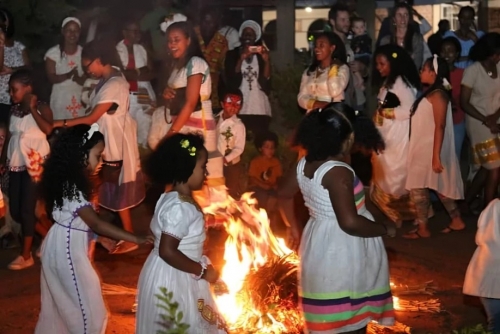
The festivities often begin the day before Enkutatash, with families gathering on New Year's Eve to light bonfires. Homes are cleaned and decorated, and new clothes are donned, symbolizing a fresh start. On the morning of Enkutatash, young girls sing as they visit neighbors, offering blessings and receiving small gifts in return. These gifts, traditionally coins or bread, are often saved and used for personal expenses or to contribute to family needs. Boys, on the other hand, often paint pictures of saints or biblical stories and present them to neighbors, receiving similar tokens of appreciation. These traditions reinforce community bonds and instill a sense of generosity and social responsibility in the younger generation.
The reason behind the seven-year difference lies in the unique structure of the Ethiopian calendar. Unlike the Gregorian calendar, which is based on the solar year with a slight adjustment for leap years, the Ethiopian calendar is rooted in the Coptic calendar, closely linked to the Ethiopian Orthodox Tewahedo Church.
The Ethiopian calendar follows a solar year of 365 days, divided into 12 months of 30 days each, with a 13th month of five days (six days in a leap year). The leap year occurs every four years.
The discrepancy in years originates from a different calculation of the birth of Jesus Christ. While the Roman Church, which influenced the Gregorian calendar, calculated Jesus's birth in AD 1, the Ethiopian Orthodox Church calculated it in 8 AD. This difference of approximately eight years, coupled with other calculations, resulted in the Ethiopian calendar running approximately seven years behind.
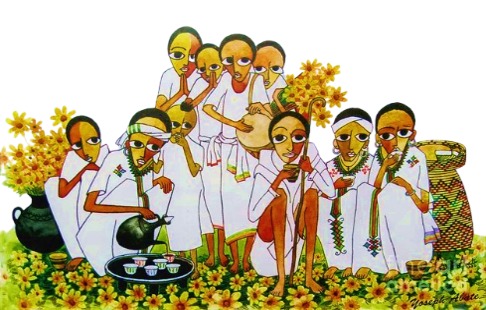
For Ethiopians, Enkutatash is a time for reflection, forgiveness, and renewal. It’s a moment to appreciate the blessings of the past year and to look forward to the future with hope and optimism. The Ethiopian Consulate General in Bahrain plans to celebrate the New Year and showcase Ethiopian culture, including the traditional coffee ceremony and cultural dances, at Adhari Park on September 5, 2025, starting from 3 PM. The event is open to everyone interested in experiencing this authentic culture.
asfsf
Related Posts