

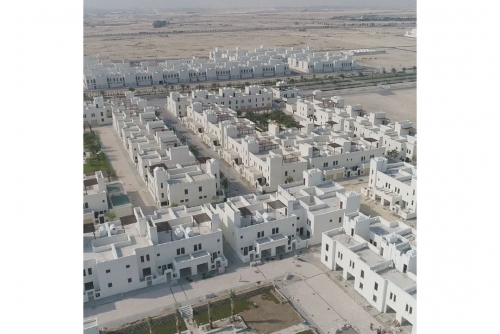
10,000 new homes to be built by 2026
TDT | Manama
Email: mail@newsofbahrain.com
Bahrain’s property market is set to gather pace through 2025 and 2026, driven by the Kingdom’s Economic Vision 2030 and mirrored by a wider building surge across the Gulf.
According to Statista, the real estate and construction sector made up 13.5 per cent of Bahrain’s output in 2023, with annual growth recorded at 1.3 per cent.
The government aims to raise GDP to BD18.4 billion by 2028.
Residential rents jumped by 23 per cent in 2024, with demand strongest for spacious, well-finished flats in areas such as Diyar Al Muharraq, Bahrain Bay and Dilmunia.
Tenants have shown a clear preference for newer developments with easy access to services and transport.
Investor interest has been buoyed by recent changes in ownership laws, which now permit full foreign ownership, alongside the introduction of a ‘golden residency’ scheme for properties worth over $530,000.
Rental yields in Bahrain range between six and eleven per cent, placing the kingdom among the stronger performers in the Gulf, according to Knight Frank Middle East.
New housing supply is also building momentum.
More than 10,000 units are expected to be delivered by 2026 through projects such as Diyar Al Muharraq, Dilmunia Island and Bahrain Bay.
These schemes are being developed alongside infrastructure works including the King Hamad Causeway and the Bahrain Metro.
Some contractors have reported limited capacity due to a growing pipeline of ongoing works.
Across the region, a similar picture is emerging.
A report by MEED pointed to strong sales and an influx of projects in Saudi Arabia and the United Arab Emirates, though it noted a more measured outlook this year.
Slower global growth, regional political tensions and pressure on household finances are beginning to weigh on momentum.
Fitch has cautioned that oversupply in Dubai and Riyadh may trigger downward price adjustments.
The direction of the market over the next two years is likely to depend on how well developers and investors adapt to shifting conditions.
Matching new supply to population growth and long-term planning will be essential to avoid a build-up of unsold stock.
Those who maintain that balance may remain competitive; those who misread demand could struggle to keep pace.
Related Posts