

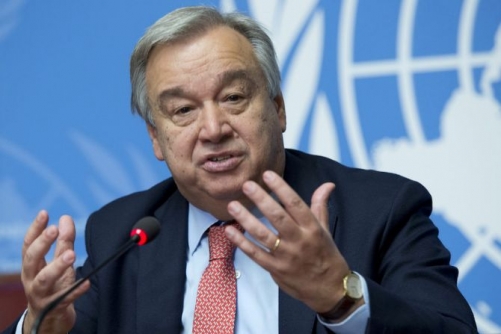
UN: No military solution to the Middle East conflict
TDT | Manama
Email: mail@newsofbahrain.com
The United Nations stated that there is “no military solution” to the ongoing conflict in the Middle East, urging all parties to continue diplomatic efforts following recent talks between the United States and the Islamic Republic of Iran held in Islamabad, Pakistan.
According to a statement attributed to the Spokesperson for the UN Secretary-General, no agreement was reached during the Pakistan-hosted discussions. However, the UN described the engagement as a “positive and meaningful step” toward renewed dialogue between the two sides.
The statement emphasized that a comprehensive agreement cannot be achieved quickly, given deep-rooted differences. It called on both parties to continue negotiations constructively in pursuit of a lasting settlement.
The UN also stressed that the ceasefire must be fully respected and added that all violations should stop immediately.
Expressing appreciation for mediation efforts, the Secretary-General acknowledged the role of Pakistan as host, alongside Saudi Arabia, Egypt, and Türkiye, and encouraged continued international support for diplomatic initiatives.
The statement further underscored the importance of respecting freedom of navigation under international law, including in the Strait of Hormuz.
It warned that ongoing maritime disruptions have left around 20,000 seafarers stranded on vessels, facing worsening conditions, while also contributing to wider global economic instability.
According to the UN, disruptions to shipping routes have increased pressure on global trade, including rising costs linked to fuel, transport, and supply chain interruptions. It also noted that disruptions in fertilizer supply chains are worsening food insecurity for vulnerable populations worldwide.
In response, the UN Office for Project Services (UNOPS), working with UN Trade and Development (UNCTAD), the International Maritime Organization (IMO), and the International Chamber of Commerce, is advancing efforts to operationalize a mechanism aimed at improving conditions in the Strait of Hormuz, first announced on 27 March.
Separately, the Secretary-General’s Personal Envoy, Jean Arnault, continues regional engagement, consulting with key stakeholders to support efforts toward a comprehensive and durable agreement.
Related Posts