

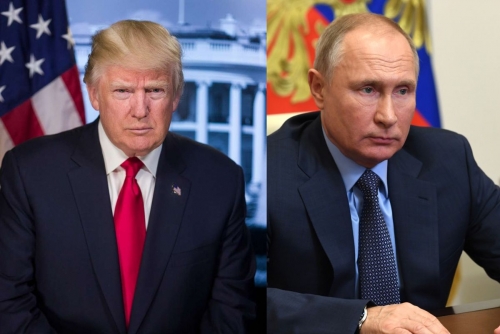
U.S. Rejects Putin’s Nuclear Cap Proposal
Email: online@newsofbahrain.com
Washington: President Donald Trump has declined Russian President Vladimir Putin’s proposal to extend a longstanding nuclear arms control agreement, setting the stage for a significant shift in global arms-control architecture. The decision comes as the last major U.S.–Russia treaty limiting strategic nuclear weapons has officially lapsed.
Trump dismissed President Putin’s suggestion that both sides voluntarily maintain the existing caps on deployed strategic nuclear warheads and delivery systems for an additional year beyond the treaty’s expiry. Instead, the U.S. leader reiterated his preference for crafting a new, modernized nuclear arms control framework that could endure longer and, he says, better address current global threats.
The treaty in question, commonly known as New START, was first signed in 2010 and was extended once in 2021. It had placed legally binding limits on both Moscow’s and Washington’s deployed nuclear arsenals, capping each side at 1,550 strategic warheads and associated delivery systems. Its lapse marks the first time in decades that the world’s two largest nuclear powers are not bound by such limits.
In comments on his Truth Social platform, Mr. Trump criticized New START as outdated and flawed, calling for nuclear experts to draft a more “sustainable” agreement that would eventually include additional nuclear-armed states specifically China, whose arsenal continues to grow but is not covered by the expiring pact.
U.S. officials have pushed the idea that a future arms-control regime must account not only for Russia but also China’s expanding nuclear forces, a position underscored by senior administration voices at recent disarmament discussions.
While Moscow had endorsed extending the deployment caps to buy time for broader negotiations, the Kremlin expressed regret at the treaty’s expiration but said it remains open to dialogue if Washington engages constructively. Kremlin advisers insisted Russia will continue a “responsible” approach toward nuclear weapons, even as it evaluates its next strategic steps.
The treaty’s termination has drawn concern from arms-control experts and world leaders alike. Observers warn that without formal constraints or verification mechanisms, strategic transparency between the U.S. and Russia could degrade, increasing the chances of miscalculation or tension in future crises.
Despite the setback, both countries are preparing to resume high-level military dialogues aimed at preventing misunderstandings and maintaining channels of communication a critical lifeline as nuclear arsenals go unconstrained for the first time in decades.
Related Posts