

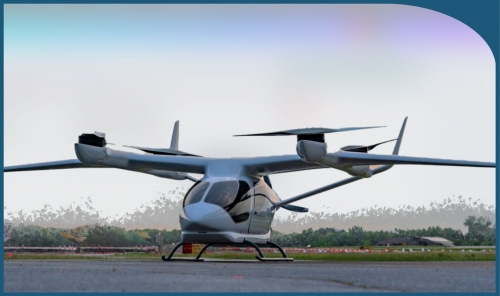
Norway Tests Electric Plane in Real-Life Flight
An electric plane successfully flew between the Norwegian airports of Stavanger and Bergen on Thursday, simulating a cargo flight under real-life conditions, Norwegian airline operator Avinor announced.
The small aircraft—an Alia model built by US manufacturer Beta—covered the 160-kilometre (100-mile) route in a test conducted by the Norwegian branch of transport company Bristow. The flight took 55 minutes and followed a route in southeastern Norway, simulating cargo operations.
“This is the first time an electric plane has taken the trade route between Stavanger and Bergen,” said Karianne Helland Strand, one of Avinor’s directors. “Everything went very well.”
Avinor, the state-owned company that manages airports and air traffic control in Norway, noted that the test flight relied on visual navigation rather than instruments. The evaluation aims to assess how electric planes could integrate into air traffic and ground infrastructure.
Norwegian regulatory authorities are closely monitoring the tests to ensure that electric flights can be launched commercially once the technology is ready, expected between 2028 and 2030. The testing period began in August and will continue until January 2026.
“It’s like the first real-world test,” said pilot Jeremy Degagne. He added that the plane’s battery life allows journeys of up to 400 kilometres—enough for a round trip between Stavanger and Bergen.
“I don’t have range anxiety because we plan to fly the aircraft within its limitations,” Degagne explained. “With an electric car, you might think you can make it 10 more kilometres to a charging station. In aviation, you wouldn’t do that. We have the same energy limitations as a conventional aircraft has for fuel.”
Norway, a pioneer in electric cars and boats, hopes to make a similar mark in aviation by exploring low- and zero-emission air travel. The aviation sector is among the most challenging to decarbonize and currently accounts for nearly three percent of global carbon dioxide emissions.
Related Posts