

When Punishment Fails, Look Beyond the Behaviour
Consultant explains eight reasons children repeat mistakes, from limited self-control to unmet emotional needs
TDT | Manama
Email: mail@newsofbahrain.com
A child breaks a rule, gets punished, promises not to do it again—and then repeats exactly the same behaviour.
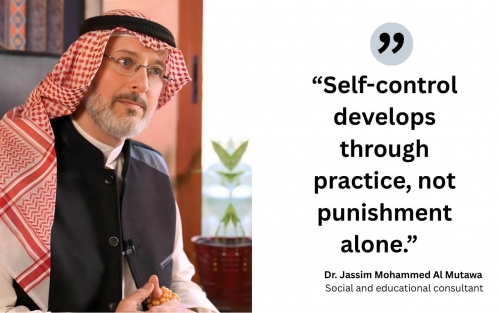
For parents, the pattern can look like stubbornness or deliberate disobedience. But social and educational consultant Dr Jassim Mohammed Al Mutawa says repeated behaviour can have deeper causes, including skills the child has not yet developed or needs that have not been addressed.
His first explanation is that knowing a rule does not automatically give a child the ability to follow it.
A child may understand that shouting, hitting or throwing toys is wrong, yet still struggle to control the impulse when emotions take over. Self-control develops gradually through age, experience, practice and guidance.
The second reason is that behaviour often serves a purpose.
A child may repeat an action because it brings attention, creates a sense of importance, communicates an emotion, asserts independence or gives the child a feeling of control. In some cases, the behaviour that irritates parents can become a reliable way of getting their full attention.
Third, punishment may stop an action without teaching the child what to do instead.
Taking away a toy after a child snatches it may stop the behaviour temporarily. But unless the child learns how to ask for a turn, express frustration or wait patiently, the same situation can produce the same reaction again.
The fourth factor is emotion.
Anger, jealousy and frustration can become stronger than a child's ability to follow an instruction remembered from the previous day. When emotions take over, a child may not be thinking about the earlier warning at all. Punishing the visible behaviour without addressing the emotion behind it may therefore leave the underlying problem unchanged.
Al Mutawa points to sleep deprivation, hunger, exhaustion, stress, sensory sensitivity and difficulties regulating emotions as possible factors behind repeated behaviour. In such situations, the child may not simply be refusing to change; the expected behaviour may genuinely be difficult for the child to manage at that moment.
The message for parents is therefore not that rules and consequences have no place, but that punishment alone may not address why a behaviour keeps returning.
Related Posts