

Crucial Votes on Economic and Governance Bills
TDT | Manama
Email: mail@newsofbahrain.com
Parliament is set to debate a government proposal on Tuesday to use surplus funds from the unemployment insurance account to cover April wages for insured Bahraini workers, as authorities move to cushion businesses affected by the ongoing regional crisis.
The draft amendment would allow payments from the fund for one month, capped at each worker’s insured wage and subject to existing legal conditions. Officials described the measure as a temporary step aimed at maintaining job stability, supporting employers and preventing layoffs.
Parliament’s Services Committee has backed the proposal, noting it aligns with broader efforts to ease financial pressure on private-sector firms, provided no workers are dismissed.
Around 106,000 Bahraini workers are expected to benefit, with estimates placing the April wage bill between BD80 million and BD100 million. The unemployment fund reportedly holds about BD600 million in assets.
While business groups welcomed the move, they cautioned that economic strain could extend beyond April. Lawmakers have also suggested expanding support for up to three months, though officials said further measures remain under review.
Fishermen and Drivers Face Income Strain
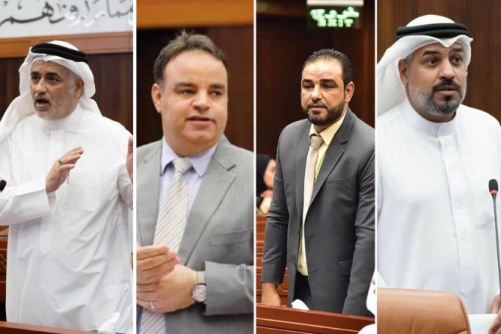
Members of Parliament have submitted an urgent proposal to expand April wage support to include fishermen, taxi drivers and other daily earners facing income loss.
The proposal, put forward by MPs Mohsen Al Asboul, Hisham Al Ashiri, Jaleela Al Sayed, Mahmood Fardan and Mohammed Al Alaiwi, calls for broader access to government assistance through the unemployment fund.
Lawmakers say many workers who rely on daily or irregular income remain unprotected, even as private sector salaries are covered under existing support measures.
Fishermen have been affected by seasonal fishing restrictions in April and May, while driving instructors, taxi drivers and bus operators report declining demand and fewer customers.
MPs described these groups as among the most vulnerable, noting that their earnings depend on daily activity rather than fixed wages.
Set to Ease Rules for Questioning Ministers
Under the proposed amendments, a motion to question a minister would be considered valid if supported by a simple majority of MPs, replacing the current two-thirds threshold.
The draft also introduces a mechanism allowing such matters to be discussed in a closed session upon request by the government, the Speaker, or at least 10 MPs.
The request would itself be voted in secret. If two-thirds of members reject it, the debate would proceed in public.
According to the government’s memorandum, the changes intend to modernise parliamentary procedures while balancing oversight and efficient governance. It stated that the reforms are consistent with constitutional provisions governing parliamentary work.
A new paragraph added to Article 146 would regulate closeddoor sittings in cases of ministerial questioning, aligning with Article 79 of the Constitution, which permits confidential sessions under specific conditions.
Related Posts