

Is Bahrain’s Date Palm Farming Using Excess Water?
TDT | Manama
Email: mail@newsofbahrain.com
Some farms are cutting water. Others are still pouring in more than they need.
In Bahrain, where every drop counts, a new study forces a difficult question into the open: are we overwatering one of the Kingdom’s most iconic crops?
Research led by Dr Abdelhadi Abdelwahab Mohamed, Associate Professor and Coordinator of Desert Farming Techniques and Soilless Agriculture, points to a clear answer. Yes, and by as much as half.
Over two years, Khalas date palms were tested under reduced irrigation. Water was cut by up to 50 percent. The result did not match expectations. Yields did not fall. For years, the belief has been simple.
More water means more production. This study directly challenges that idea, showing that excess water does not necessarily translate into higher output.
The scale of overuse is not minor. A single palm is often assumed to need around 50 cubic metres of water each year. The study indicates it may require far less. Cut that figure in half across farms, and the savings quickly multiply into thousands of cubic metres per hectare, every year.
System
The surprise lies not in the technology, but in the outcome. Whether using traditional bubbler systems or more advanced subsurface methods, yields remained largely unchanged.
In the second year, smart volume-based irrigation was introduced. Water was measured, controlled, and delivered exactly where needed. Yields rose sharply in some cases, not because more water was used, but because waste was eliminated.
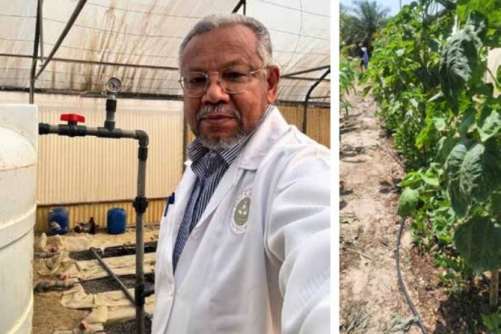
During a field tour by The Daily Tribune across Bahraini farms, the shift was already visible.
These systems are no longer limited to date palms. Farmers are applying the same precision-based irrigation to vegetables and other crops, maintaining stable growth while using less water under the same harsh conditions. The change is no longer theoretical. It is happening on the ground.
Bahrain’s conditions make the issue more urgent. Much of the soil is saline and alkaline. Water itself often has a high salt content. Under these conditions, overirrigation wastes more than just water. It can damage the soil, weaken plants, and increase long-term costs.
Future
Experts and investors are exploring ways to scale date palm production using advanced technologies such as tissue culture, aiming to enter global markets and compete with leading producers.
But there is a line that cannot be crossed. If Bahrain wants to compete globally in date palms, it cannot afford to waste water locally. Researchers are calling for locally tailored crop coefficients and wider adoption of smart irrigation systems designed for Bahrain’s climate.
Related Posts