

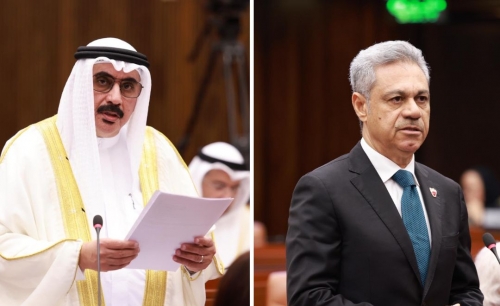
Renewable energy bill set for review on fees, liability and ministerial powers
TDT | Manama
Email : editor@newsofbahrain.com
The Shura Council yesterday sent a draft law proposal on renewable energy back to its Public Utilities and Environment Committee for more study, after a long debate in which members supported the move towards clean power but questioned fees, liability and the scope of ministerial powers. The proposal, put forward by Talal Al Mannai, Dalal Al Zayed, Dr Mohammed Ali Hassan, Jumaa Al Kaabi and Ali Al Aradi, is tied to Bahrain’s Economic Vision 2030 and to easing power costs for homes and businesses.
Committee rapporteur Ejlal Bubshait said the text is meant to “create an attractive environment for investment in renewable energy, keep pace with the global move towards clean energy and set a comprehensive legal frame for the sector”, while easing pressure on the grid and “saving in the budget of the Ministry of Electricity and Water”.
Clean power
Bubshait told the chamber that the draft is designed to “strengthen the Kingdom’s ability to grow renewable and sustainable energy resources” by encouraging clean power in place of electricity generated from fossil fuels.
She said the proposal would help Bahrain reach carbon neutrality and hit its targets for cutting emissions, and would “reinforce the steps Bahrain has taken towards the environmental challenges facing countries around the world and its international obligations in the environmental field”.
She added that the proposal gives legal form to the Royal Vision of His Majesty King Hamad bin Isa Al Khalifa as outlined in the Royal Address opening the fourth session.
In that speech, HM the King stressed “the importance of focused investment in renewable energy to achieve the independence needed to preserve and develop national resources in order to sustain the natural and agricultural environment”.
Approval
Under the draft, anyone who wants to connect a unit generating electricity from renewable sources to the distribution system would first need approval from the competent authority, under rules issued by the minister.
Bubshait said this step was meant to ensure that connections “meet the technical requirements that do not harm the distribution system, maintain the smooth running of the network and avoid faults that may result from connection without regard to technical aspects”. After the exchanges, the Council voted to return the proposal to the Public Utilities and Environment Committee so that members can re-examine the clauses and report back with revised wording.
During the debate, several members made the case for a shift away from fossil fuels. Committee head Dr Hassan said renewable energy, “also known as clean energy”, comes from “permanent sources such as the sun, wind and water” and is gaining ground worldwide.
Alternative
“It is the alternative to fossil energy and investment in it is increasing in major countries and in some Arab states,” he said. “The proposal aims to reduce dependence on ordinary energy sources.” He pointed to “the development of technologies for producing this energy, increased awareness in this field, and the international obligations imposed by environmental agreements and the reduction of carbon emissions” as reasons for the move.
He added that the draft “is in line with Bahrain’s Vision 2030 and matches the Sustainable Development Goals in Goal 17, and has a large economic return”.
Second deputy chairperson of the Council Dr Jehad Al Fadhel told colleagues the draft sits with the chamber’s wider work on new areas such as artificial intelligence.
“The draft law proposal strengthens the Council’s lead in updating the legislative system, such as the law on artificial intelligence,” she said.
Related Posts